
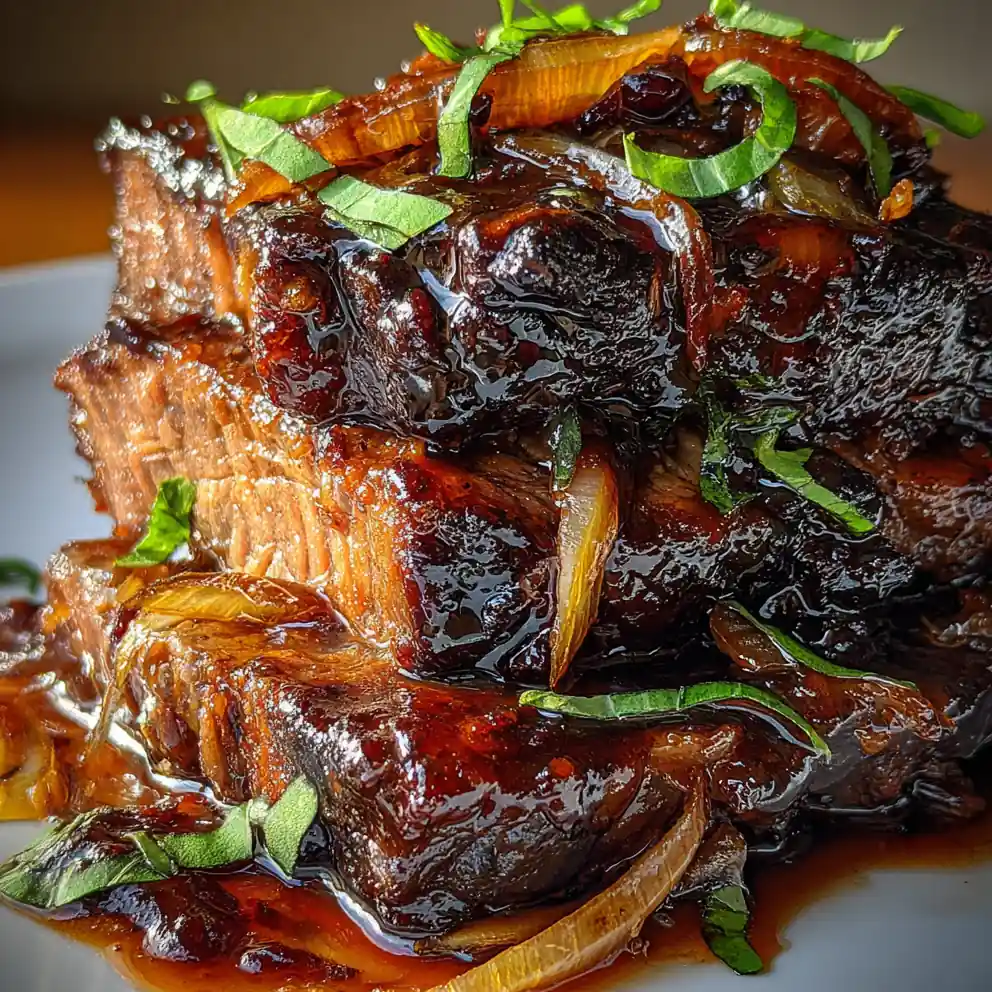
I love a good slow-braised meal, especially when it turns a budget-friendly cut of meat into something truly luxurious. This specific beef arm roast recipe transforms a tough cut into a deeply savory, fall-apart tender meal, finished with a glossy, dark pomegranate molasses glaze that elevates everything on the plate. It’s a wonderful, easy dinner idea that takes minimal hands-on time, making it one of my go-to family recipes for Sunday dinner or for simple entertaining.
Ingredients
- 1.8 kg / 4 lbs boneless beef arm roast, tied. Look for a cut labeled “boneless arm roast” or “shoulder roast” from the chuck section. Tying with kitchen twine helps the roast maintain its shape during the long braise for even cooking. Pat the roast very dry with paper towels before seasoning for a better sear.
- 30 ml / 2 tablespoons olive oil. Use a high-quality extra virgin olive oil for searing the meat and sautéing the aromatics. If you don’t have olive oil, any neutral high-heat oil like vegetable or canola oil will work. Divide this amount as instructed (1 tbsp for searing, 1 tbsp for onions).
- 2 large yellow onions (about 600g / 1.3 lbs), thinly sliced. Yellow onions work best here, as they caramelize beautifully and provide a deep, sweet base flavor for the glaze. Slicing them thinly ensures they break down fully during the cooking process. This large amount of onions is key to creating a rich, savory gravy.
- 3 carrots (about 300g / 0.6 lbs), peeled and roughly chopped. The carrots add a natural sweetness and depth to the braising liquid. Chopping them roughly prevents them from turning to complete mush during the long cook time. Carrots and celery form the classic aromatic base (mirepoix).
- 2 celery stalks (about 200g / 0.4 lbs), roughly chopped. Celery provides a savory, aromatic foundation for the glaze, balancing the sweetness of the onions and carrots. Chop to roughly the same size as the carrots for even cooking. Make sure to wash celery thoroughly before chopping.
- 4 cloves garlic, minced. Garlic adds a sharp, pungent flavor to the braise that mellows out during cooking. Mincing ensures the garlic integrates fully into the sauce. Use fresh garlic for the best flavor; avoid pre-minced garlic for this step.
- 30 ml / 2 tablespoons tomato paste. Tomato paste adds umami depth and a subtle acidity that cuts through the richness of the beef. Cook the paste briefly (about 1 minute) after adding it to deepen its flavor. Look for high-quality tomato paste in a tube, which stays fresh longer than canned.
- 60 ml / 4 tablespoons pomegranate molasses. Pomegranate molasses is the star ingredient, providing a tangy, slightly sweet, and complex flavor profile. Look for it in international markets or online; do not substitute with pomegranate juice, as it lacks the necessary concentration. This ingredient transforms a simple braise into something truly special for this particular beef arm roast recipe.
- 700 ml / 3 cups halal-certified beef broth or vegetable broth. Use a high-quality, low-sodium beef broth to control the overall salt level of the glaze. If using vegetable broth instead, choose a robust, savory variety. Ensure the broth is warm or room temperature when adding it to prevent shocking the meat.
- 2 bay leaves. Bay leaves add a subtle, savory aroma to the braising liquid. Be sure to remove these before serving, as they are not edible. Use fresh bay leaves for a more pronounced flavor.
- 5 sprigs fresh thyme. Fresh thyme pairs perfectly with beef and provides an earthy, herbaceous note. Use the whole sprigs in the braise and remove them later with the bay leaves. If using dried thyme, reduce the amount to 1 teaspoon and add it with the tomato paste.
- 5 ml / 1 teaspoon kosher salt, plus more to taste. Kosher salt provides a clean, savory taste for seasoning the meat before searing. Adjust additional seasoning at the end, as the braising liquid will reduce and concentrate flavors. Remember to season generously, especially before searing the meat.
- 2.5 ml / 1/2 teaspoon freshly ground black pepper, plus more to taste. Freshly ground black pepper adds a necessary sharpness to the dish. Season the beef thoroughly with salt and pepper before searing for a flavorful crust. Adjust at the end along with the salt.
- 15 ml / 1 tablespoon cornstarch (optional, for thickening). Use cornstarch to create a slurry for thickening the final glaze if a richer consistency is desired. Mix cornstarch with an equal amount of cold water before adding it to the simmering liquid to prevent lumps. Skip this step if you prefer a thinner, au jus-style sauce.
- 30 ml / 2 tablespoons cold water (if using cornstarch). This is used to create the cornstarch slurry for thickening. Using cold water ensures the slurry is smooth and lump-free before whisking it into the hot braising liquid.
- 15g / 1/2 oz fresh parsley or cilantro, finely chopped, for garnish. Fresh herbs provide a bright pop of color and freshness that balances the rich, dark sauce. Finely chop the herbs just before serving to maximize flavor and appearance. Either parsley or cilantro works well, depending on your preference.
Instructions
- Prep the beef and sear it. Pat the 4 lb beef arm roast completely dry with paper towels; this is essential for achieving a good crust. Season generously on all sides with 1 teaspoon kosher salt and 1/2 teaspoon black pepper. Heat 1 tablespoon of olive oil in a large Dutch oven over medium-high heat until shimmering, then sear the roast for 3-4 minutes per side until deeply browned; remove the roast and set it aside.
- Caramelize the onions and aromatics. Reduce the heat to medium and add the remaining 1 tablespoon of olive oil to the pot. Add the thinly sliced yellow onions and cook, stirring occasionally, for 15-20 minutes until they are deeply caramelized and tender, reaching a rich golden brown color. Add the chopped carrots and celery to the pot and cook for 5-7 minutes until slightly softened, then stir in the minced garlic and tomato paste for another 2 minutes until fragrant.
- Build the braising liquid. Stir in the pomegranate molasses, scraping up any browned bits from the bottom of the pot to incorporate all the flavor into the sauce. Pour in the 3 cups of beef broth, add the bay leaves and fresh thyme sprigs, and bring the liquid to a simmer. Ensure the braising liquid is fully combined before returning the beef to the pot.
- Braise the roast until tender. Return the seared beef arm roast to the Dutch oven, ensuring it is partially submerged in the liquid. Cover the pot tightly with a lid and transfer to a preheated oven at 160°C / 325°F. Braise for 3 to 3.5 hours, or until the beef is fork-tender; flip the roast once halfway through cooking to ensure even braising. When I make this for my family, I always check the roast at the 2.5 hour mark. If the braising liquid reduces too quickly, add another half cup of broth or water to keep the meat submerged and prevent drying.
- Rest and prepare the glaze. Carefully remove the Dutch oven from the oven; transfer the cooked roast to a cutting board, tent loosely with foil, and let it rest for 15-20 minutes before slicing. While the beef rests, strain the braising liquid into a saucepan, discarding the bay leaves and thyme sprigs but reserving the caramelized vegetables. Bring the liquid to a simmer over medium heat; for a thicker glaze, whisk together the cornstarch and cold water, then gradually whisk into the simmering liquid and cook for 2-3 minutes until thickened.
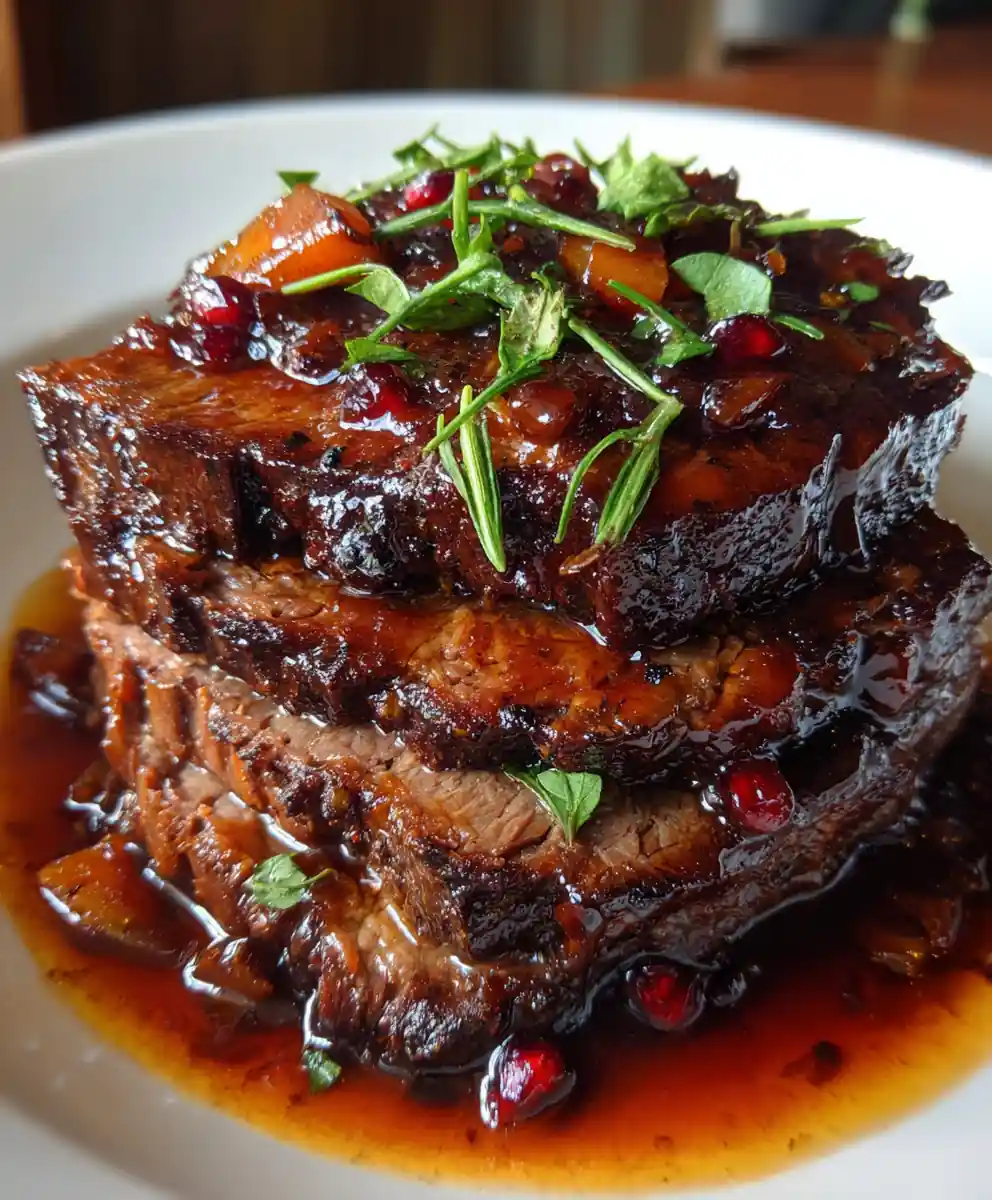
- Slice and serve. Slice the rested beef arm roast against the grain into thick, even slices. Arrange the slices on a serving platter and Spoon the pomegranate molasses glaze generously over the beef. Stir the reserved caramelized vegetables back into the glaze and season to taste with additional salt and pepper; garnish with chopped parsley or cilantro.
Tips for the Best Beef Arm Roast
There are a few simple tricks for turning a humble piece of beef into something truly special. This beef arm roast recipe relies on patience and a few key techniques to guarantee fall-apart tenderness.
- Start with a good sear. Don’t skip searing the beef; this crucial step builds the foundation of flavor and creates a delicious crust on the outside of the roast. Ensure the pot is hot before adding the meat, and avoid overcrowding the pot, searing in batches if necessary. Take your time to get a deep brown color on all sides of the beef.
- Don’t cut the cooking time short. The magic of braising a tough cut like beef arm roast happens in the last hour when the connective tissue breaks down into gelatin. If your beef is still tough after 3 hours, continue cooking for another 30-60 minutes until it’s easily pierced by a fork. The low and slow temperature (325°F / 160°C) is critical for tender results.
- Make it ahead of time. This recipe is actually better on day two, once the flavors have had time to fully meld together. Prepare the entire roast and glaze, let cool, store in the fridge overnight, then gently reheat on the stovetop or in the oven the next day. I frequently make this beef arm roast recipe on Sunday so I have a high-protein, easy dinner for Monday night.
Pairing Suggestions for a Hearty Meal
This rich pomegranate molasses glaze begs to be served with sides that can soak up every drop. Here are some of my favorite family-friendly pairings:
- Creamy mashed potatoes or polenta. The perfect base for soaking up every drop of the rich pomegranate molasses glaze. Serve the beef slices over a generous bed of warm, buttery potatoes or creamy polenta.
- Roasted root vegetables. Roasted carrots, parsnips, or potatoes complement the sweet and savory notes of the braise. Roast separately to maintain texture and serve alongside the braised beef.
- Crusty bread and greens. Provide a baguette or sourdough slices for wiping up any remaining sauce on the plate. Balance the richness with a simple side salad or sautéed green beans for a healthy meal.
FAQs
What cut of meat is a beef arm roast, exactly?
A beef arm roast, or chuck arm roast, comes from the shoulder area of the cow. It’s a tough cut with a lot of connective tissue, which makes it perfect for low and slow cooking methods like braising. The high fat and connective tissue content break down into tender, juicy meat when cooked slowly.
Can I make this in a slow cooker or Crock-Pot?
Yes, after searing the beef and caramelizing the onions (steps 1-2), transfer everything to the slow cooker insert. Cook on low for 6-8 hours or on high for 3-4 hours, or until fork-tender. The glaze can be finished on the stovetop after removing the beef.
What can I use instead of pomegranate molasses?
Pomegranate molasses can be tricky to find in some areas. The best substitute is a balsamic glaze or a reduction of balsamic vinegar. Alternatively, try using a mix of balsamic vinegar and a touch of brown sugar. For a less sweet option, you could also use a mix of soy sauce and lemon juice for that tangy complexity.
How do I store leftovers and reheat them?
Store leftover beef arm roast and glaze in an airtight container in the refrigerator for up to 3-4 days. To reheat, gently warm the slices in a saucepan with the glaze over low heat, or wrap them in foil and place them in a 300°F oven until warmed through. I actually make extra just for easy high-protein lunches during the week.
Why did my beef arm roast turn out tough?
Beef arm roast requires a significant amount of time for the connective tissues to soften. If your roast is tough, it simply needs more time; return it to the oven for another 30 minutes to an hour. Check for tenderness by pulling at the meat with a fork—it should shred easily.
Conclusion
This slow-cooked beef arm roast recipe proves that tough cuts of meat can be transformed into incredibly flavorful, tender meals. The pomegranate molasses glaze adds a special touch that makes this perfect for Sunday dinners or special occasions. Pin this easy family-friendly beef arm roast recipe for later and add it to your rotation for a delicious, hearty meal this week.
Print
beef arm roast recipe
- Total Time: 245 minutes
- Yield: 8 servings 1x
- Diet: Halal
Description
This beef arm roast recipe transforms a tough cut into a deeply savory, fall-apart tender meal, finished with a glossy pomegranate molasses glaze.
Ingredients
- 4 lbs boneless beef arm roast, tied
- 2 tbsp olive oil
- 2 large yellow onions, thinly sliced
- 3 carrots, roughly chopped
- 2 celery stalks, roughly chopped
- 4 cloves garlic, minced
- 2 tbsp tomato paste
- 4 tbsp pomegranate molasses
- 3 cups beef broth (halal-certified or vegetable broth)
- 2 bay leaves
- 5 sprigs fresh thyme
- 1 tsp kosher salt, plus more to taste
- 0.5 tsp black pepper, plus more to taste
- 1 tbsp cornstarch (optional)
- 2 tbsp cold water
- 0.5 oz fresh parsley or cilantro, finely chopped, for garnish
Instructions
- Prep and Sear Beef: Pat the beef roast dry, season generously with salt and pepper, and sear in 1 tablespoon of olive oil in a large Dutch oven until deeply browned (3-4 minutes per side). Remove the roast and set it aside.
- Caramelize Onions and Aromatics: Add the remaining 1 tablespoon of olive oil to the pot, then add sliced onions and cook for 15-20 minutes until deeply caramelized. Add carrots and celery, cook 5-7 minutes, then stir in minced garlic and tomato paste for 2 minutes until fragrant.
- Build Braising Liquid: Stir in the pomegranate molasses, scraping up browned bits from the bottom of the pot. Pour in beef broth, add bay leaves and thyme sprigs, and bring to a simmer.
- Braise Roast Until Tender: Return the seared beef roast to the Dutch oven, cover tightly, and transfer to a preheated 325°F (160°C) oven. Braise for 3 to 3.5 hours, or until fork-tender, flipping the roast halfway through to ensure even cooking.
- Rest and Prepare Glaze: Remove the roast from the oven, transfer to a cutting board, tent with foil, and rest for 15-20 minutes. Strain the braising liquid into a saucepan, discarding bay leaves and thyme. Bring the liquid to a simmer; whisk in a cornstarch and water slurry (if desired) and cook for 2-3 minutes until thickened.
- Slice and Serve: Slice the rested beef against the grain. Arrange slices on a platter, spoon the pomegranate molasses glaze over the beef, garnish with parsley or cilantro, and serve.
Notes
To maintain shape, tie the beef roast with kitchen twine before searing. For a thicker sauce, prepare a cornstarch slurry and whisk it into the simmering braising liquid after removing the roast. Monitor the braising liquid level during cooking and add extra broth if needed to prevent the meat from drying out.
- Prep Time: 45 minutes
- Cook Time: 200 minutes
- Category: Main Course
- Method: Braising
- Cuisine: American
Nutrition
- Serving Size: 1 slice (150 g)
- Calories: 450 calories
- Sugar: 8 g
- Sodium: 350 mg
- Fat: 25 g
- Saturated Fat: 10 g
- Unsaturated Fat: 10 g
- Trans Fat: 0 g
- Carbohydrates: 15 g
- Fiber: 3 g
- Protein: 35 g
- Cholesterol: 100 mg
FREE PRINTABLE RECIPE
Get the Printable Recipe PDF (Free)
Enter your email and we’ll send you the ingredients + step-by-step instructions as a clean PDF you can save to your phone.
- ✅ Printable PDF (ingredients + steps)
- ✅ Save it to your phone (no long scrolling)
- ✅ Includes cook time + servings
- ✅ Easy to follow
FAQ
Where’s the full recipe?
It’s delivered as a printable PDF so you can save it and cook without scrolling.
I didn’t get the email.
Check Spam/Promotions and search your inbox for your site name. Then click Confirm to receive the PDF.