
I swear I can have this meal on the table faster than the delivery driver can get to my house. The moment the spicy-sweet gochujang glaze hits the skillet, a rich, savory aroma fills the kitchen, promising a better-than-takeout meal in under 30 minutes. This easy shrimp and broccoli recipe is a lifesaver on busy weeknights, offering a high-protein, family-friendly option that’s truly satisfying. The key to this particular shrimp and broccoli recipe is perfectly cooked broccoli, tender-crisp, coated in a rich, glossy sauce. It’s a complete meal in one pan that even new home cooks can master, giving you a healthy alternative to ordering out.
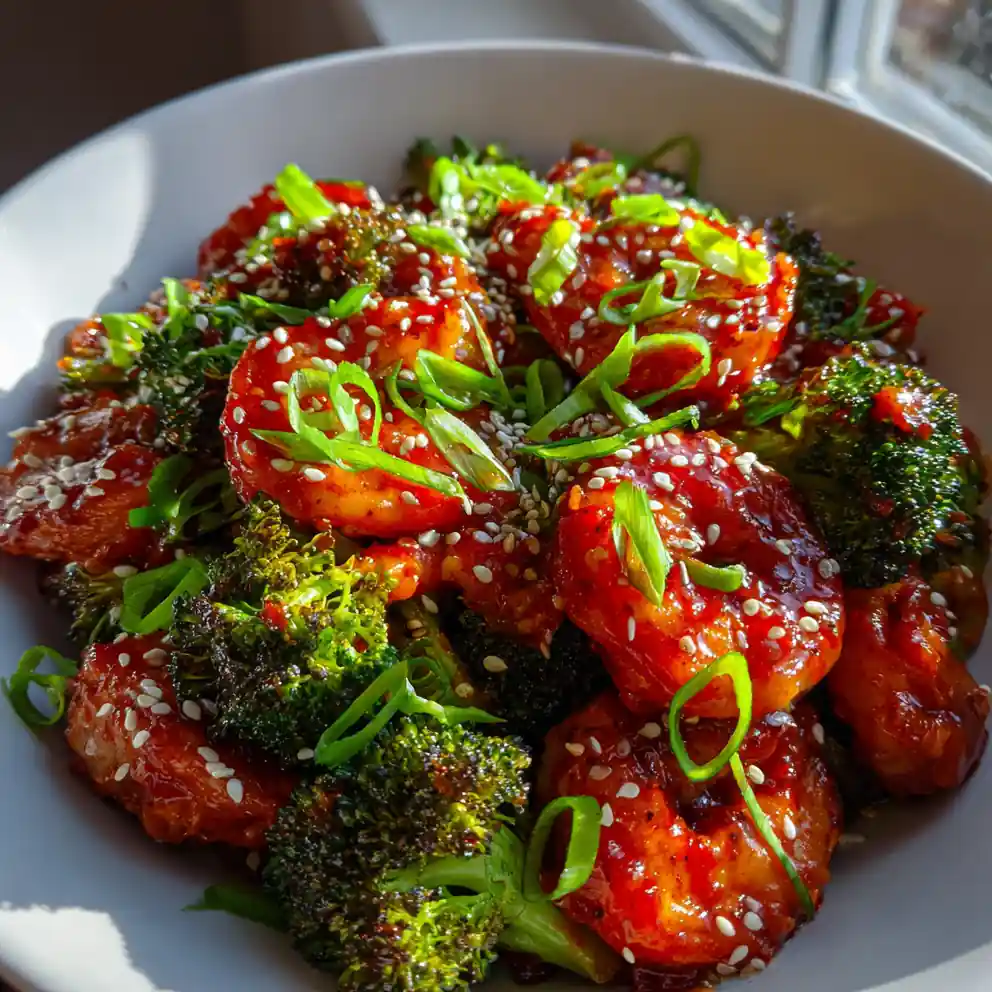
Ingredients
- Shrimp (450 g / 1 lb large)
Use large (21/25 count) shrimp for best results, peeled and deveined. Leaving the tails on looks nice for presentation, but removing them makes eating easier for a quick dinner. If using frozen shrimp, make sure to thaw completely and pat dry before cooking. - Broccoli Florets (450 g / 1 lb)
Cut the broccoli into uniform, bite-sized florets so they cook evenly. Ensure the pieces are completely dry after blanching to prevent a watery sauce. While you can use frozen broccoli, fresh is recommended for better texture and color. - Vegetable Oil (2 tbsp / 30 ml)
Use a neutral, high-smoke point oil for stir-frying, such as vegetable oil, grapeseed oil, or canola oil. We’ll divide this amount: use 1 tablespoon for cooking the shrimp and the rest (1 tablespoon) for the broccoli stir-fry. - Aromatics: Garlic and Ginger (2 cloves minced, 1 tbsp grated)
Use fresh garlic and ginger for the best flavor; avoid using dried powders or pre-minced jars. Grate the fresh ginger using a microplane for quick release of flavor, balancing the sweetness and spice. - Gochujang (60 ml / 1/4 cup)
Gochujang is Korean chili paste; its fermenting process provides a deep, savory, umami flavor that is sweet, slightly smoky, and moderately spicy. The gochujang is crucial here, so avoid substitutions if possible, though you can use Sriracha for a different flavor profile if needed. Check the ingredients to ensure it is gluten-free if necessary, as some brands contain wheat. - Soy Sauce (3 tbsp / 45 ml)
Use a quality low-sodium soy sauce to control the overall saltiness of the sauce. If you need a gluten-free option, substitute with tamari in equal measure. Ensure the soy sauce used is alcohol-free. - Honey (2 tbsp / 30 ml)
The honey balances the spice and salinity of the gochujang and soy sauce, creating a complex and sweet glaze. Adjust the amount slightly based on your preferred level of sweetness or spiciness (add more honey to reduce perceived heat). For a vegan alternative, use maple syrup, noting it will alter the flavor slightly. - Rice Vinegar (1 tbsp / 15 ml)
A touch of acidity helps to brighten the sauce and prevent it from tasting heavy or overly sweet. Use unseasoned rice vinegar for the best flavor; avoid using seasoned rice vinegar, which contains sugar and salt. You may substitute with apple cider vinegar, but rice vinegar provides the more authentic flavor. - Toasted Sesame Oil (1 tsp / 5 ml)
Add this at the end of the sauce preparation to enhance its nutty, deep flavor without overwhelming the dish. Do not use regular sesame oil; ensure it is toasted for the characteristic flavor profile. Use sparingly, as a little goes a long way. - Slurry: Cornstarch (1 tbsp / 15 ml) and Water or Broth (60 ml / 1/4 cup)
The slurry is essential for thickening the sauce to a glossy, coatable consistency for this shrimp and broccoli recipe. Whisk the cornstarch into cold water or broth to avoid clumping; do not add dry cornstarch directly to a hot liquid. Use vegetable broth for a deeper savory flavor or water for a neutral base. - Garnishes: Sesame Seeds and Green Onions
Garnish with toasted sesame seeds for added crunch and visual appeal. Thinly sliced green onions add freshness and a mild onion bite to finish the dish. Add these right before serving for maximum freshness.
Instructions
- Prepare the Sauce and Slurry First
In a small bowl, combine the gochujang, soy sauce, honey, rice vinegar, toasted sesame oil, minced garlic, and grated ginger. Whisk thoroughly until the glaze is smooth and uniform, ensuring the honey is fully dissolved. In a separate small bowl, prepare the slurry by whisking the cornstarch into the water or vegetable broth until completely lump-free. Set both aside. - Blanch the Broccoli for Texture
Bring a medium pot of lightly salted water to a boil. Add the broccoli florets and blanch for 2-3 minutes. Remove the broccoli when it reaches a tender-crisp texture (bright green and still slightly firm). Immediately drain the broccoli and transfer it to an ice bath to stop the cooking process and preserve the vibrant green color; drain well after cooling and pat dry. - Cook the Shrimp
Pat the shrimp completely dry with paper towels; this prevents steaming and encourages a nice sear. Heat 1 tablespoon of vegetable oil in a large wok or skillet over medium-high heat until shimmering. Add the shrimp in a single layer and cook for 1-2 minutes per side until pink, opaque, and cooked through. Avoid overcooking to keep them tender. Remove the shrimp from the skillet and set aside. - Stir-Fry the Broccoli and Build the Sauce Base
Add the remaining 1 tablespoon of vegetable oil (if needed) to the skillet, heating it over medium-high heat. Add the blanched broccoli and stir-fry for 2-3 minutes until a slight char develops and it becomes tender. Reduce the heat to medium and pour in the prepared gochujang sauce mixture. - Thicken the Glaze and Combine
Bring the gochujang sauce to a gentle simmer with the broccoli. Slowly whisk in the cornstarch slurry, stirring constantly for 1-2 minutes until the sauce thickens and becomes glossy. The sauce should coat the broccoli evenly and reach your desired consistency. If the sauce seems too thick, whisk in a tablespoon of extra broth or water to thin it out slightly. - Final Toss and Serve
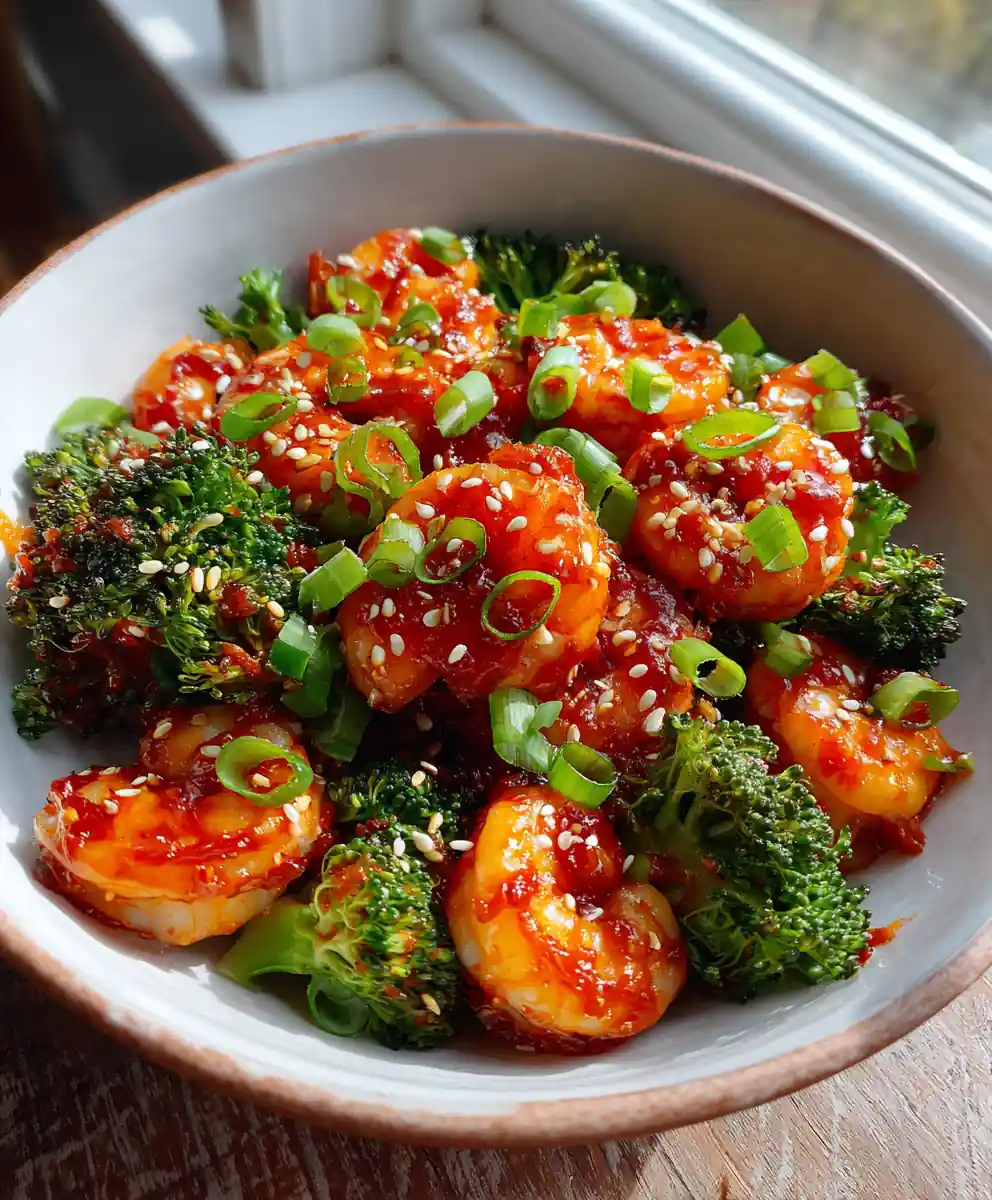
Return the cooked shrimp to the skillet with the thickened glaze. Toss gently to ensure the shrimp and broccoli are evenly coated and heated through (this should only take about 1 minute). Serve immediately in a wide bowl, garnished generously with toasted sesame seeds and thinly sliced green onions.
Make It a Complete Meal: Serving Suggestions
This gochujang glazed shrimp and broccoli recipe is great on its own, but it’s even better when paired with a side to soak up all the delicious sauce. Here are some of my favorite ways to serve this quick family dinner:
- Steamed Rice: A bed of fluffy white rice, like jasmine or basmati, is perfect for absorbing the sweet and savory glaze. Brown rice works just as well for a healthy alternative.
- Noodles: For a heartier meal, serve this over stir-fried egg noodles or udon noodles. Toss them together at the end for a complete one-bowl meal.
- Side Salad: Balance the richness of the glaze with a crisp side salad or simple cucumber side dish. A light vinaigrette complements the Asian flavors well.
Gochujang Glaze and Adjusting Spiciness
The gochujang glaze is key to this easy shrimp and broccoli recipe, offering a complex, savory, sweet, and moderately spicy flavor profile. The recipe as written provides a mild to moderate spice level that is generally family-friendly, similar to a sweet chili sauce.
- To reduce spiciness: Use slightly less gochujang (e.g., reduce the 1/4 cup amount by about 1-2 tablespoons) and increase the honey by a teaspoon to maintain the sweetness and glaze consistency.
- To increase spiciness: If you prefer more heat, add 1/2 teaspoon of red pepper flakes or a small dash of hot sauce along with the gochujang glaze ingredients during preparation.
Make-Ahead Tips and Reheating Leftovers
This shrimp and broccoli recipe is excellent for meal prep, making it easy to have a healthy dinner ready even on the busiest weeknights. Proper storage ensures great leftovers without sacrificing texture.
- Meal Prep: You can prepare the gochujang glaze up to 3 days in advance and store it in an airtight container in the refrigerator. This cuts down on weeknight cooking time significantly.
- Storage: Store leftovers in an airtight container for up to 3 days in the refrigerator. The sauce may thicken further as it cools.
- Reheating: For best results, reheat leftovers on the stovetop over medium heat with a splash of water or broth to loosen the sauce. Avoid reheating in the microwave, which can quickly overcook the shrimp, making it rubbery.
FAQs
Can I use frozen shrimp in this recipe?
Yes, but make sure to thaw the shrimp completely first and pat them very dry before cooking. This helps ensure they sear properly rather than steaming, which can lead to a watery result in your shrimp and broccoli recipe.
How do I ensure my shrimp doesn’t become rubbery?
Cook the shrimp quickly over high heat for 1-2 minutes per side and remove them immediately once opaque. They will finish cooking when tossed back into the sauce, preventing them from becoming rubbery.
Can I substitute another vegetable for broccoli?
Yes, green beans, bell peppers, or sugar snap peas are great alternatives, but blanching times may vary depending on the vegetable’s density. Ensure any substitutions are cut into uniform pieces for even cooking.
Is this recipe gluten-free?
The recipe is only gluten-free if you use tamari instead of regular soy sauce and ensure the gochujang you buy is wheat-free. Some brands of gochujang contain wheat as a thickener, so always check the label.
My sauce isn’t thickening; what went wrong?
This is usually a cornstarch issue. Ensure your cornstarch slurry was properly mixed and the sauce reached a simmer before adding the slurry. If I find that the sauce for my shrimp and broccoli recipe isn’t thickening properly, I’ll sometimes mix another small slurry (1 teaspoon cornstarch with 1 tablespoon cold water) and add it to the simmering sauce, stirring constantly until it reaches the right consistency.
How can I prepare this recipe for kids who don’t like spice?
This gochujang shrimp and broccoli recipe is easily adjusted for sensitive palates. Reduce the gochujang to 1-2 tablespoons and add an extra tablespoon of honey for sweetness; the kids will enjoy the savory-sweet flavor without the heat.
Can I make this with chicken instead of shrimp?
Yes, you can easily adapt this shrimp and broccoli recipe using chicken. Cut boneless, skinless chicken breast or thighs into bite-sized pieces and cook them for 5-7 minutes, until no longer pink inside, before adding the sauce.
Conclusion
This quick shrimp and broccoli recipe offers a powerful combination of vibrant flavors and easy execution, making it the perfect choice for a busy evening. If you enjoyed this recipe, save it to your Pinterest board for later and share it with friends who love easy dinner ideas.
Print
shrimp and broccoli recipe
- Total Time: 20 minutes
- Yield: 4 servings 1x
- Diet: General
Description
A quick, family-friendly weeknight meal featuring shrimp and broccoli in a rich, glossy gochujang sauce, ready in under 30 minutes.
Ingredients
- 1 lb large shrimp, peeled and deveined
- 1 lb broccoli florets
- 2 tbsp neutral oil
- 2 cloves garlic, minced
- 1 tbsp grated fresh ginger
- 1/4 cup gochujang (Korean chili paste)
- 3 tbsp low-sodium soy sauce
- 2 tbsp honey
- 1 tbsp rice vinegar
- 1 tsp toasted sesame oil
- 1 tbsp cornstarch
- 1/4 cup water or broth
- Sesame seeds and green onions for garnish
Instructions
- Prepare Gochujang Sauce and Slurry: In a small bowl, whisk together the gochujang, soy sauce, honey, rice vinegar, toasted sesame oil, minced garlic, and grated ginger. In a separate bowl, prepare the slurry by whisking the cornstarch into the water or broth until lump-free.
- Blanch Broccoli Florets: Bring a medium pot of lightly salted water to a boil. Blanch the broccoli florets for 2-3 minutes until tender-crisp. Drain immediately and transfer to an ice bath; drain well and pat dry.
- Cook Shrimp: Pat the shrimp completely dry. Heat 1 tablespoon of oil in a skillet over medium-high heat. Add the shrimp in a single layer and cook for 1-2 minutes per side until pink and opaque. Remove the shrimp from the skillet and set aside.
- Stir-Fry Broccoli and Sauce: Add the remaining 1 tablespoon of oil to the skillet (if needed) and add the blanched broccoli. Stir-fry for 2-3 minutes until a slight char develops. Pour in the prepared gochujang sauce mixture.
- Thicken Glaze: Bring the sauce to a gentle simmer with the broccoli. Slowly whisk in the cornstarch slurry, stirring constantly for 1-2 minutes until the sauce thickens and becomes glossy.
- Combine and Serve: Return the cooked shrimp to the skillet with the thickened glaze. Toss gently to coat and heat through for about 1 minute. Serve immediately, garnished with toasted sesame seeds and thinly sliced green onions.
Notes
To reduce the spice level, decrease the gochujang to 1-2 tablespoons and add an extra tablespoon of honey. If meal prepping, prepare the sauce up to 3 days in advance. Reheat leftovers on the stovetop with a splash of water or broth to loosen the sauce and avoid overcooking the shrimp.
- Prep Time: 10 minutes
- Cook Time: 10 minutes
- Category: Main Course
- Method: Stir-Frying
- Cuisine: Korean
Nutrition
- Serving Size: 1 serving
- Calories: 250 kcal
- Sugar: 10 g
- Sodium: 550 mg
- Fat: 7 g
- Saturated Fat: 1 g
- Unsaturated Fat: 5 g
- Trans Fat: 0 g
- Carbohydrates: 17 g
- Fiber: 3 g
- Protein: 25 g
- Cholesterol: 175 mg
FREE PRINTABLE RECIPE
Get the Printable Recipe PDF (Free)
Enter your email and we’ll send you the ingredients + step-by-step instructions as a clean PDF you can save to your phone.
- ✅ Printable PDF (ingredients + steps)
- ✅ Save it to your phone (no long scrolling)
- ✅ Includes cook time + servings
- ✅ Easy to follow
FAQ
Where’s the full recipe?
It’s delivered as a printable PDF so you can save it and cook without scrolling.
I didn’t get the email.
Check Spam/Promotions and search your inbox for your site name. Then click Confirm to receive the PDF.