
I find that the most rewarding family dinners are those that simmer on their own while I relax, and this hearty korean beef stew recipe fits the bill perfectly.
This specific recipe for Galbijjim features fall-off-the-bone tender beef short ribs and a deep, complex sauce made unique by a black garlic doenjang infusion. The result is a savory, high-protein meal that’s perfect for a weekend gathering or a special weeknight dinner. While traditional Galbijjim often relies on a simpler soy-based broth, our version takes a straightforward sear-and-simmer method and elevates it with layers of umami, making it a new favorite for easy home cooking. The aroma alone, rich with savory beef and sweet garlic, promises a meal that feels both special and deeply comforting.
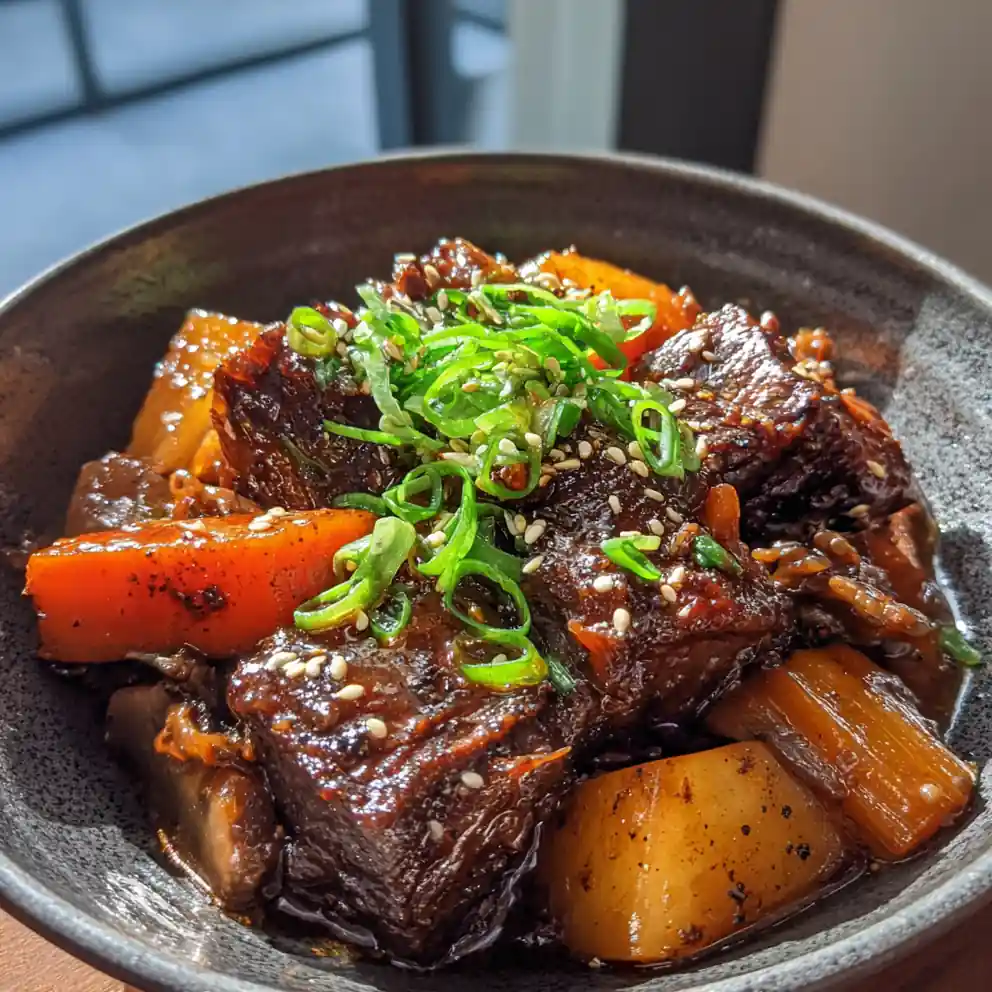
Ingredients
- 1.5 kg (3.3 lbs) boneless beef short ribs, cut into 5 cm (2 inch) chunks. These cuts have a perfect amount of intramuscular fat, ensuring the meat stays incredibly moist and tender during slow cooking. If you’re using a leaner cut, such as chuck roast, be sure to adjust the cooking time down slightly.
- For the Marinade:
- 120 ml (1/2 cup) low-sodium soy sauce (or coconut aminos for a gluten-free option) and 60 ml (1/4 cup) maple syrup. The maple syrup provides sweetness that balances the savory notes of the soy sauce and doenjang.
- 8 cloves garlic, minced; 5 cm (2 inch) piece fresh ginger, peeled and minced; 30 ml (2 tbsp) sesame oil; 5 ml (1 tsp) black pepper; and 1 small grated Asian pear (about 120 g / 1 cup puree). The Asian pear contains enzymes that naturally tenderize the beef during marination, making it essential for a classic korean beef stew recipe.
- For the Stew:
- 1.5 L (6 cups) unsalted beef broth (I use low-sodium broth to control the final salt level) and 30 ml (2 tbsp) neutral oil (canola or grapeseed) for searing.
- 2 large carrots and 1/2 medium daikon radish, both cut into 3-4 cm (1.5 inch) pieces. Also, 8-10 dried shiitake mushrooms (rehydrated and stems removed for a significant umami boost), 12-15 peeled chestnuts (fresh or frozen for a sweet, nutty counterpoint), and 6-8 dried jujubes (red dates) for natural sweetness.
- For the Black Garlic Doenjang Infusion:
- 4-5 cloves black garlic, peeled and mashed; 30 g (2 tbsp) doenjang (Korean fermented soybean paste for savory depth); 15 ml (1 tbsp) maple syrup; and 60 ml (1/4 cup) unsalted beef broth. The black garlic’s molasses-like sweetness perfectly balances the earthy notes of the doenjang.
- For Garnish:
- 2-3 stalks green onions, finely chopped, and 5 ml (1 tsp) toasted sesame seeds.
Instructions
Prepare the Marinade and Marinate the Beef: In a large mixing bowl, combine the low-sodium soy sauce, maple syrup, minced garlic, minced ginger, sesame oil, black pepper, and grated Asian pear puree. Add the beef short rib chunks, tossing well to ensure every piece is thoroughly coated in the marinade. Cover and refrigerate for at least 2 hours, or preferably overnight, for maximum flavor penetration. The longer marination results in more tender beef for this korean beef stew recipe.
Sear the Beef: Heat the neutral oil in a large Dutch oven or heavy-bottomed pot over medium-high heat until it shimmers. Remove the beef from the marinade, reserving the marinade liquid. Working in small batches, sear the beef pieces until deeply browned on all sides, about 3-4 minutes per batch. Do not overcrowd the pot, or the beef will steam instead of searing. Remove the seared beef and set it aside on a plate.
Begin the Simmering Process: Return all seared beef to the pot. Pour in the reserved marinade and add the 1.5 L (6 cups) of unsalted beef broth. Add the rehydrated shiitake mushrooms, peeled chestnuts, and dried jujubes. Bring the mixture to a full boil over high heat, then reduce the heat to low, cover, and let it simmer for 1 hour.
Add Hard Vegetables and Continue Simmering: After the initial 1 hour of simmering, add the prepared carrots and daikon radish to the pot. Continue to simmer, covered, for another 1 to 1.5 hours, or until the beef short ribs are very tender and easily pierced with a fork. I’ve found that when using thicker cut short ribs for this healthy recipe, I sometimes need an extra 30 minutes of simmering time to reach perfect tenderness; just keep checking every 15 minutes until it’s ready.
Prepare the Black Garlic Doenjang Infusion: While the stew simmers during its final hour, prepare the flavor infusion in a small bowl. Mash the peeled black garlic cloves with the doenjang, 15 ml maple syrup, and 60 ml unsalted beef broth until a relatively smooth paste forms. The black garlic should be fully incorporated for a uniform flavor distribution.
Finish and Thicken the Stew: Once the beef and vegetables are tender, stir the Black Garlic Doenjang Infusion into the stew. Increase the heat slightly to medium-low and continue to simmer, uncovered, for 15-20 minutes, stirring occasionally. The sauce should slightly thicken during this time, becoming glossy and clinging beautifully to the beef and vegetables.
Serve and Garnish: Taste and adjust the seasoning if necessary (I usually add a pinch more salt or soy sauce here if I used low-sodium broth). Ladle the hot stew into deep bowls, ensuring a generous portion of beef and vegetables. Garnish generously with finely chopped green onions and a sprinkle of toasted sesame seeds before serving this hearty korean beef stew recipe.
Why This Version Uses Black Garlic and Doenjang
Many standard korean beef stew recipes rely solely on soy sauce and sugar for flavor. This version elevates the dish by incorporating two key ingredients: doenjang (fermented soybean paste) and black garlic. Black garlic, which is regular garlic slow-fermented for several weeks, adds a rich, molasses-like sweetness and deep umami without any sharp bite. Doenjang provides a savory, earthy dimension that balances the sweetness of the maple syrup and Asian pear. This combination creates a complex, restaurant-quality sauce that feels less sugary and more sophisticated than a standard korean beef stew recipe, yet remains a family-friendly meal.
Make-Ahead Tips and Serving Suggestions
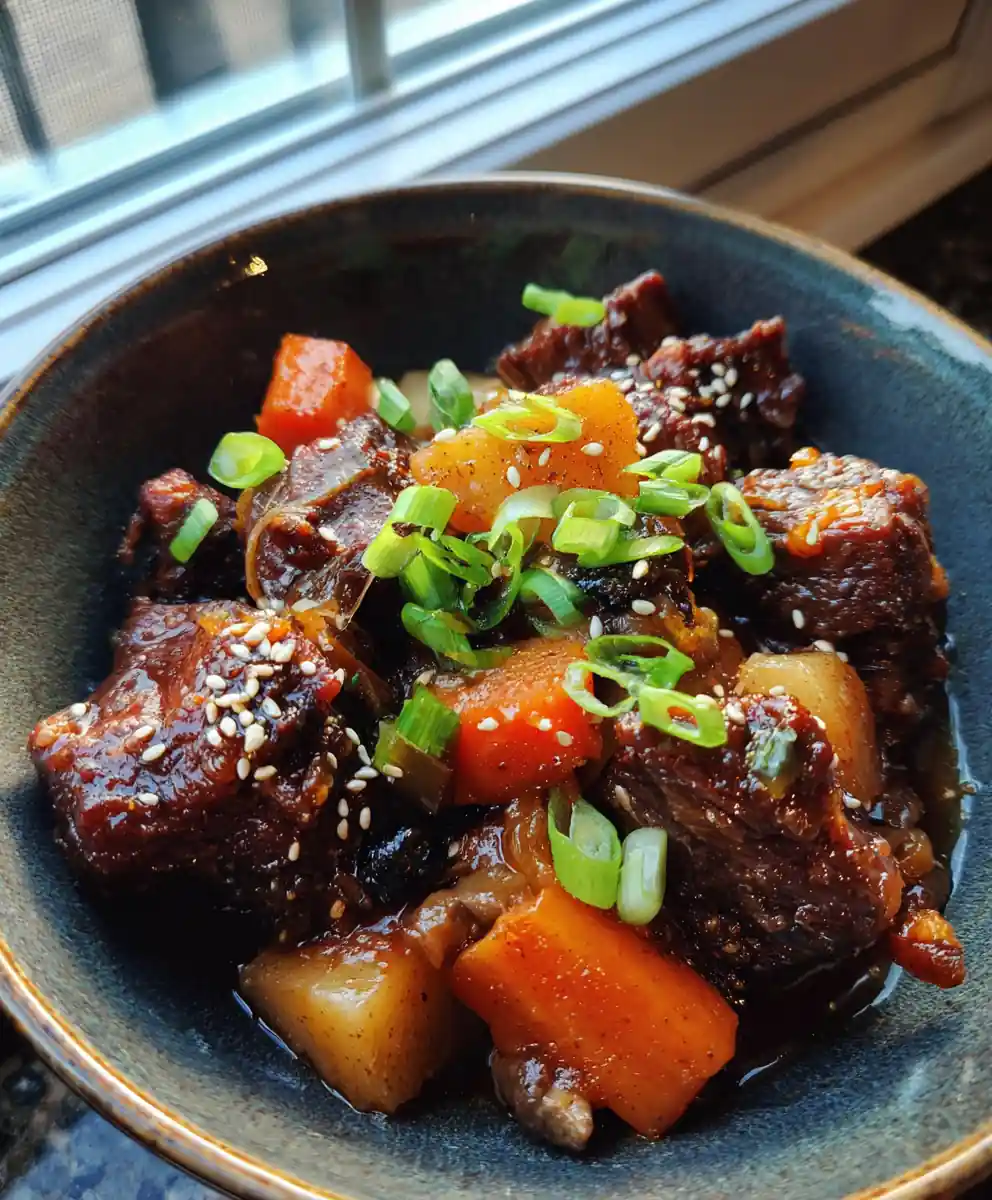
This slow-cooked korean beef stew is actually better on day two, making it an ideal choice for healthy meal prep. The flavors deepen overnight, creating a richer sauce.
- Storage and Freezing: Let the stew cool completely, then transfer it to an airtight container. Refrigerate for up to 4 days or freeze for up to 3 months.
- Reheating Instructions: Reheat gently on the stovetop over low heat, adding a splash of broth or water if needed to maintain consistency.
- Serving Suggestions: Serve this hearty stew over warm white rice or mixed grain rice to soak up every drop of the sauce. For a complete family-friendly dinner, serve with simple side dishes like quick-pickled cucumbers or a side of kimchi.
Common Questions for Slow-Cooked Korean Beef Stew
What is the best cut of beef to use for this recipe?
Boneless beef short ribs are the best choice for this korean beef stew recipe because the higher fat content keeps the meat moist and ensures fall-off-the-bone tenderness during the long simmering process. For a slightly more budget-friendly or leaner option, you can substitute boneless beef chuck roast, but shorten the simmering time by about 30 minutes to avoid a dry texture.
Where can I find ingredients like jujubes and doenjang?
Ingredients like doenjang and dried jujubes are readily available at most Asian grocery stores. If you can’t find black garlic, you can omit it entirely. As a substitute to add color and some depth, try adding 1/2 tsp of dark soy sauce, but understand the flavor profile of the stew will change slightly without the specific sweetness of black garlic.
Can I use a slow cooker instead of a Dutch oven?
Absolutely. After searing the beef (Step 2), transfer everything to a slow cooker. Cook on low for 6-8 hours or on high for 3-4 hours. Add the carrots and daikon during the last hour to prevent them from becoming mushy. The long, slow cooking method is perfect for creating a truly tender korean beef stew.
How do I thicken the stew if it’s too watery?
If your stew seems too watery at the end, simply remove the lid and let it simmer uncovered for an additional 15-20 minutes to reduce the liquid. For a faster fix, create a cornstarch slurry by mixing 1 tbsp of cornstarch with 1 tbsp of cold water, then stir it into the stew and simmer until thickened.
Is this recipe spicy?
No, this traditional Galbijjim recipe is savory and sweet, designed to be family-friendly. It relies on ingredients like Asian pear and maple syrup for sweetness, not heat. If you prefer a spicy korean beef stew, you can add 1 tbsp of Gochugaru (Korean red pepper flakes) or a few dashes of hot sauce during the final simmering step.
How do I ensure the vegetables keep their shape?
When I make this for my kids, I find that cutting the carrots and daikon into slightly larger chunks (closer to 2 inches) helps them hold their shape and texture even after the long cook time, so they don’t disintegrate into the sauce. This makes for a more appealing plate when serving.
Is this recipe gluten-free or low-carb friendly?
To make this recipe gluten-free, substitute the soy sauce with an equal amount of tamari or coconut aminos. The recipe itself is naturally quite healthy and high-protein, but to reduce carbs further, omit the chestnuts and serve with cauliflower rice instead of white rice. This makes it a great choice for low-carb meals.
Conclusion
This slow-cooked korean beef stew recipe offers rich, deeply satisfying flavors perfect for a healthy eating lifestyle without requiring hours of active cooking. Pin this recipe now and plan to make it this week for a comforting dinner that will delight everyone around your table.
Print
korean beef stew recipe
- Total Time: 210 minutes
- Yield: 6 servings 1x
- Diet: General
Description
This hearty Korean beef stew, or Galbijjim, features tender, slow-cooked boneless short ribs in a rich, complex sauce enhanced by black garlic and doenjang. It offers savory and sweet flavors, making it a comforting, family-friendly meal perfect for gatherings or special dinners.
Ingredients
- For the Stew:
- 1.5 kg (3.3 lbs) boneless beef short ribs, cut into 5 cm (2 inch) chunks
- 2 tbsp neutral oil (canola or grapeseed)
- 1.5 L (6 cups) unsalted beef broth
- 2 large carrots, cut into 3-4 cm (1.5 inch) pieces
- 1/2 medium daikon radish, cut into 3-4 cm (1.5 inch) pieces
- 8–10 dried shiitake mushrooms (rehydrated)
- 12–15 peeled chestnuts (fresh or frozen)
- 6–8 dried jujubes (red dates)
- For the Marinade:
- 120 ml (1/2 cup) low-sodium soy sauce
- 60 ml (1/4 cup) maple syrup
- 8 cloves garlic, minced
- 5 cm (2 inch) piece fresh ginger, peeled and minced
- 30 ml (2 tbsp) sesame oil
- 5 ml (1 tsp) black pepper
- 1 small grated Asian pear (about 120 g / 1 cup puree)
- For the Black Garlic Doenjang Infusion:
- 4–5 cloves black garlic, peeled and mashed
- 30 g (2 tbsp) doenjang (Korean fermented soybean paste)
- 15 ml (1 tbsp) maple syrup
- 60 ml (1/4 cup) unsalted beef broth
- For Garnish:
- 2–3 stalks green onions, finely chopped
- 5 ml (1 tsp) toasted sesame seeds
Instructions
- Marinate the Beef: In a large mixing bowl, combine all marinade ingredients and add the beef short ribs. Toss thoroughly to coat, then cover and refrigerate for at least 2 hours, or preferably overnight, to tenderize the meat.
- Sear the Beef: Heat neutral oil in a large pot or Dutch oven over medium-high heat. Remove beef from the marinade (reserve the marinade liquid) and sear in small batches until deeply browned on all sides (3-4 minutes per batch). Do not overcrowd the pot. Remove seared beef and set aside.
- Simmer Initial Ingredients: Return all seared beef to the pot. Add the reserved marinade, beef broth, rehydrated shiitake mushrooms, chestnuts, and dried jujubes. Bring to a boil, then reduce heat, cover, and simmer for 1 hour.
- Add Vegetables and Finish Simmering: After 1 hour, add the prepared carrots and daikon radish. Continue to simmer, covered, for another 1 to 1.5 hours, or until the beef short ribs are very tender.
- Prepare Flavor Infusion: While the stew simmers during the final hour, prepare the black garlic infusion. Mash the black garlic cloves with the doenjang, 1 tbsp maple syrup, and 1/4 cup beef broth until a smooth paste forms.
- Thicken and Season: Stir the black garlic doenjang infusion into the stew. Increase heat slightly to medium-low and continue to simmer, uncovered, for 15-20 minutes, allowing the sauce to thicken slightly. Taste and adjust seasoning with additional salt or soy sauce if needed.
- Serve and Garnish: Ladle the hot stew into bowls, making sure to include beef and vegetables. Garnish generously with chopped green onions and toasted sesame seeds before serving.
Notes
For best results, marinate the short ribs for at least 2 hours or up to overnight. If using thicker cuts of short ribs, you may need to add up to 30 minutes extra simmering time to achieve perfect tenderness. To keep vegetables from disintegrating during slow cooking, cut carrots and daikon into slightly larger chunks.
- Prep Time: 30 minutes
- Cook Time: 180 minutes
- Category: Main Course
- Method: Simmering
- Cuisine: Korean
Nutrition
- Serving Size: 1 serving
- Calories: 750 kcal
- Sugar: 15 g
- Sodium: 650 mg
- Fat: 60 g
- Saturated Fat: 20 g
- Unsaturated Fat: 30 g
- Trans Fat: 0 g
- Carbohydrates: 35 g
- Fiber: 4 g
- Protein: 45 g
- Cholesterol: 150 mg
FREE PRINTABLE RECIPE
Get the Printable Recipe PDF (Free)
Enter your email and we’ll send you the ingredients + step-by-step instructions as a clean PDF you can save to your phone.
- ✅ Printable PDF (ingredients + steps)
- ✅ Save it to your phone (no long scrolling)
- ✅ Includes cook time + servings
- ✅ Easy to follow
FAQ
Where’s the full recipe?
It’s delivered as a printable PDF so you can save it and cook without scrolling.
I didn’t get the email.
Check Spam/Promotions and search your inbox for your site name. Then click Confirm to receive the PDF.