
I always thought making sushi at home was too much work until I figured out this simple technique for a perfect homemade japanese sushi rice recipe. The key is achieving that perfect glossy, slightly sticky texture that holds together without feeling mushy. This easy dinner idea transforms a simple staple into a colorful, family-friendly centerpiece, making it ideal for a weeknight meal prep or a fun activity with the kids. This step-by-step method ensures perfectly cooked grains every time, whether you’re making maki rolls or chirashi bowls.
Ingredients
- Japanese Short-Grain Rice (360 g / 2 US cups): Use specific short-grain rice (like Koshihikari or Nishiki) as it has the essential stickiness for sushi. Do not substitute long-grain rice, as it won’t hold together properly for a good japanese sushi rice recipe.
- Filtered Water (480 ml / 2 US cups): The ratio of water to rice (1:1.3) is crucial for achieving the perfect balance of firmness and tenderness. Using filtered water prevents mineral off-flavors from affecting the seasoning.
- Kombu (5 cm / 2 inches, optional): This small piece of dried kelp adds a subtle, savory umami flavor to the cooking water. It’s an optional but traditional ingredient that deepens the overall flavor profile of the sushi rice.
- FOR THE CLASSIC SUSHI VINEGAR:
Rice Vinegar (50 ml / 3 1/3 tablespoons): Choose unseasoned rice vinegar for the best flavor control.
Granulated Sugar (30 g / 2 tablespoons): Balances the sharp vinegar tang and creates the classic sweet-and-sour profile.
Sea Salt (5 g / 3/4 teaspoon): Enhances the flavors and provides necessary salinity to the rice. - FOR THE BEET & GINGER SUSHI VINAIGRETTE:
Fresh Beet (about 1 small, 60 g): Use a small, firm beet, peeled and grated, for natural coloring and a subtle earthy sweetness.
Fresh Ginger (about 1 inch, 15 g): Grate the ginger to release its warm, pungent oils, which pair nicely with the beet.
Rice Vinegar (75 ml / 5 tablespoons), Granulated Sugar (45 g / 3 tablespoons), Sea Salt (7.5 g / 1 1/4 teaspoons): These ingredients form the base of the vinaigrette, dissolving to create a colorful, tangy-sweet seasoning. - FOR GARNISH:
Toasted White Sesame Seeds (1 tablespoon): Adds texture and a nutty flavor contrast to the soft rice.
Fresh Shiso Leaves (2-3 leaves, thinly sliced): Provides a unique, slightly minty and peppery aroma (or use thinly sliced green onions as a substitute).
Instructions
Here’s how to make a perfect japanese sushi rice recipe at home. The key is patience during the rinsing and resting steps.
- Step 1: Rinse and Drain the Rice. Place the 360g of rice in a large bowl and rinse thoroughly under cold running water. Gently rub the grains between your hands and drain the cloudy water; repeat this process 5-7 times until the water runs completely clear. Transfer the rinsed rice to a fine-mesh sieve set over a bowl and allow it to drain and rest for at least 30 minutes, or up to an hour. This resting period is critical for achieving even cooking and a firm, non-mushy texture.
- Step 2: Cook the Rice. Transfer the drained rice and 480ml of fresh filtered water to a heavy-bottomed pot with a tight-fitting lid (this prevents steam from escaping). Add the piece of kombu (if using), then bring the water to a boil over medium-high heat without stirring. Immediately reduce the heat to the lowest setting, cover the pot tightly, and cook for exactly 15 minutes without lifting the lid at all during this time. Remove from heat and let steam, still covered, for another 10-15 minutes to finish cooking perfectly. If you lift the lid too early, the steam escapes and the rice may not cook evenly, leaving a hard center.
- Step 3: Prepare the Classic Sushi Vinegar. While the rice cooks and steams, combine 50ml rice vinegar, 30g granulated sugar, and 5g sea salt in a small saucepan. Heat gently over low heat, stirring continuously until the sugar and salt are completely dissolved. Remove from heat and allow the mixture to cool completely before using; hot vinegar will make the rice mushy.
- Step 4: Prepare the Beet & Ginger Vinaigrette. In a separate saucepan, combine 75ml rice vinegar, 45g granulated sugar, and 7.5g sea salt. Add the grated beet and ginger. Heat gently over low heat, stirring until the sugar and salt dissolve, then simmer for 5 minutes to fully infuse the flavors and extract the beet’s vibrant color. Strain the mixture through a fine-mesh sieve, pressing firmly on the solids to extract all liquid. Discard solids and cool the vibrant pink vinaigrette completely.
- Step 5: Season the Rice. Once the rice has steamed, transfer it to a large, wide, non-metallic bowl or hangiri (wooden tub) and discard the kombu. Gently fluff the rice using a wooden rice paddle or spatula, avoiding mashing the grains together. Divide the fluffed rice into two roughly equal portions in separate sections of the bowl. I find a wide ceramic bowl or large wooden cutting board works great for this, ensuring the rice cools quickly and evenly for this crucial step in making proper japanese sushi rice.
- Step 6: Fold in the Vinaigrettes. Pour the cooled Classic Sushi Vinegar over one portion of rice and gently fold it in using swift, cutting motions to avoid mashing the grains. Use a fan or piece of cardboard while mixing to cool the rice quickly, which enhances its glossiness. Repeat the process with the cooled Beet & Ginger Vinaigrette on the second portion of rice, fanning as you mix.
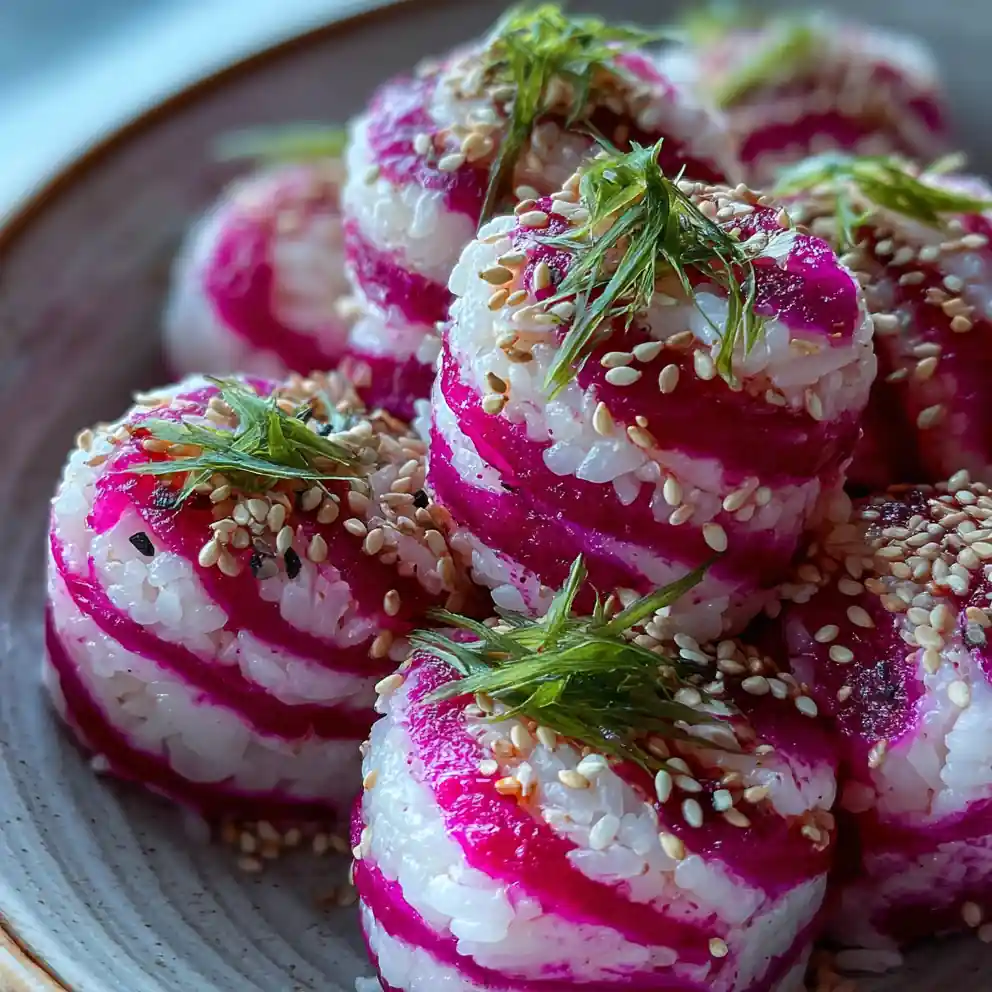
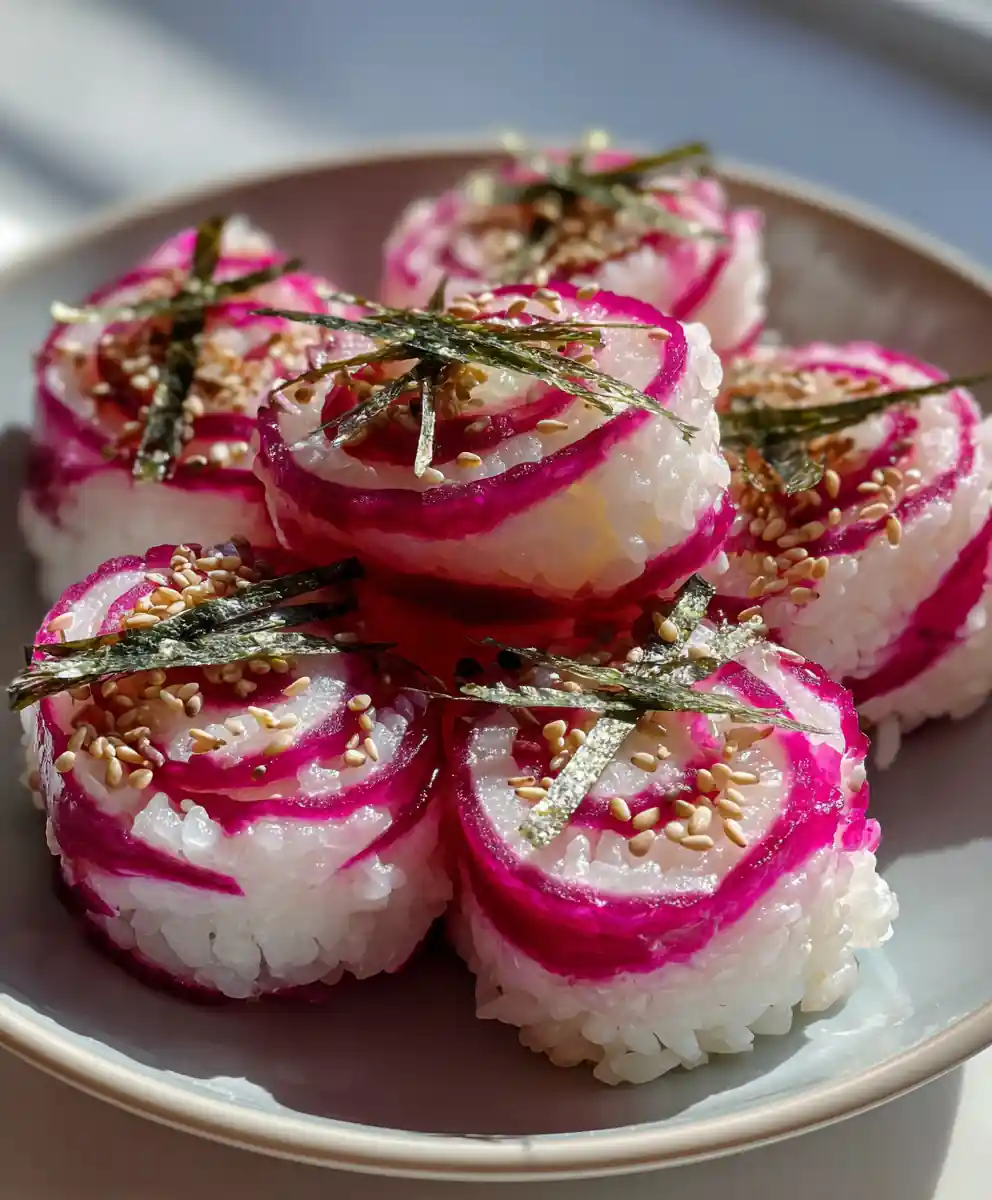
- Step 7: Create the Swirl Effect. Gently combine the two portions, folding them just enough to create a distinct swirl of pink and white. Avoid overmixing to keep both colors visible. Serve immediately or at room temperature, garnished with toasted sesame seeds and sliced shiso leaves for a beautiful, family-friendly meal. The colorful presentation makes this japanese sushi rice recipe perfect for entertaining.
The Secret to Perfect Sushi Rice Texture
Choosing the Right Rice
The foundation of this japanese sushi rice recipe is choosing the right grains. Use specific Japanese short-grain rice (sometimes labeled as sushi rice) for the high starch content needed for stickiness. Long-grain varieties lack this starch profile, resulting in a dry, loose texture instead of sticky and pliable.
Rinsing for Clarity, Not Cloudiness
Rinsing removes excess surface starch from the grains. Stopping when the water runs clear prevents the final product from becoming overly gummy and ensures the individual grains retain their distinct shape and glossy appearance after seasoning.
The Crucial Resting and Steaming
The 30-minute rest after rinsing allows the grains to absorb moisture evenly before cooking. The 10-15 minute steaming period (off-heat) is essential to finish cooking the inside of the grains without over-boiling, ensuring a tender chew without a hard center. This is a common shortcut I take for quick meals: I set a timer for 15 minutes, then leave it alone on the counter while I prep other ingredients.
How to Serve This Colorful Sushi Rice
As a Maki Roll Base
This colorful japanese sushi rice recipe creates a beautiful swirl in maki rolls. Spread the white rice over the nori sheet, then dot small portions of the pink rice over the top. When rolled, the cut pieces will display the vibrant pink swirl. This works well for healthy vegetable fillings like avocado, cucumber, or tamagoyaki.
For Chirashi Bowls
For easy dinner ideas, try chirashi bowls. Layer scoops of the white rice in the bottom of a bowl, then add a contrasting scoop of pink rice beside it. Top with your favorite fish, vegetables, or proteins for a simple, family-friendly meal.
As Colorful Onigiri (Rice Balls)
Shape the rice into traditional onigiri triangles or circles. Use the swirl method to create a two-toned effect or create half-pink, half-white balls. This is a great high-protein snack for kids’ lunch boxes or a quick low-carb meal option for adults.
Meal Prep and Storage Tips
Best Served Warm or Room Temperature
Sushi rice is designed to be eaten at room temperature; do not refrigerate immediately after making it, as this hardens the grains. If serving later, keep it covered at room temperature for up to 2 hours.
Storing Leftovers
Store any remaining sushi rice in an airtight container in the refrigerator for up to 2 days. To reheat, gently steam it in a steamer basket or place a wet paper towel over it in the microwave; avoid reheating in a pan, as this can make it dry or crusty.
FAQs
What if I don’t have a rice cooker?
The pot method used in this japanese sushi rice recipe works perfectly well and yields the same results. The key is a heavy-bottomed pot and a tight-fitting lid to trap the steam for proper cooking.
Can I use brown rice instead?
Brown rice contains a different type of starch and requires different cooking techniques and seasonings. For this specific recipe, stick to traditional Japanese short-grain white rice for the best flavor and texture. If you want a lower-carb option, try mixing the rice with cauliflower rice before seasoning.
My sushi rice turned out mushy. What happened?
Mushy rice usually happens for two reasons: 1) You didn’t rinse the rice thoroughly enough to remove excess starch, or 2) You lifted the lid during cooking or steaming, releasing the vital moisture and steam. Keep that lid on!
Do I have to add the kombu?
No, the kombu is optional and only adds a subtle background umami flavor. The primary flavor comes from the vinegar seasoning, so feel free to omit the kombu if you don’t have it on hand for this japanese sushi rice recipe.
Can I make this colorful rice with another ingredient?
Yes, you can substitute the beet with other natural colorings like turmeric (for yellow) or matcha (for green), following a similar infusion process. I personally love making a bright yellow version by adding a pinch of saffron to the vinegar mixture for a special occasion.
What is the best way to handle sticky sushi rice?
Always use a wooden or plastic paddle, not metal utensils, to handle the rice. To prevent sticking, keep your hands and paddle slightly moistened with water as you shape or fold the rice for your next easy dinner ideas.
Conclusion
Making homemade sushi rice can be simple and rewarding, turning a regular weeknight meal into a fun family activity. This vibrant beet and ginger swirl adds an element of natural color that kids (and adults) will love. Grab your ingredients and try this colorful, easy Japanese sushi rice recipe this weekend for a fun and healthy dinner at home. Don’t forget to save this recipe for future meal planning and entertaining.
Print
japanese sushi rice recipe
- Total Time: 75 minutes
- Yield: 6 servings
- Diet: General
Description
A guide to making glossy, sticky homemade Japanese sushi rice. Features a classic vinegar seasoning and a colorful beet-ginger variation for a beautiful swirl effect. Perfect for maki rolls, chirashi bowls, or onigiri.
Ingredients
- Japanese Short-Grain Rice: 360 g (2 US cups), such as Koshihikari or Nishiki for required stickiness
- Filtered Water: 480 ml (2 US cups)
- Kombu: 5 cm (2 inches), optional for umami flavor
- Classic Sushi Vinegar:
- Rice Vinegar: 50 ml (3 1/3 tablespoons)
- Granulated Sugar: 30 g (2 tablespoons)
- Sea Salt: 5 g (3/4 teaspoon)
- Beet & Ginger Vinaigrette:
- Fresh Beet (grated): 60 g (1 small)
- Fresh Ginger (grated): 15 g (1 inch)
- Rice Vinegar: 75 ml (5 tablespoons)
- Granulated Sugar: 45 g (3 tablespoons)
- Sea Salt: 7.5 g (1 1/4 teaspoons)
- Garnish:
- Toasted White Sesame Seeds: 1 tablespoon
- Fresh Shiso Leaves: 2-3 leaves (thinly sliced), or green onions
Instructions
- Rinse and Drain Rice: Place rice in a bowl and rinse under cold water. Gently rub grains between hands and drain cloudy water; repeat 5-7 times until water runs clear. Let rice drain and rest in a sieve for 30-60 minutes for even cooking.
- Cook the Rice: Transfer drained rice and 480 ml water to a heavy-bottomed pot with a tight-fitting lid. Add kombu (if using). Bring to a boil over medium-high heat, then reduce heat to the lowest setting. Cover tightly and cook for 15 minutes without lifting the lid. Remove from heat and steam, still covered, for another 10-15 minutes.
- Prepare Classic Sushi Vinegar: While rice cooks, combine 50 ml rice vinegar, 30 g sugar, and 5 g salt in a small saucepan. Heat gently, stirring until sugar and salt dissolve. Cool completely.
- Prepare Beet & Ginger Vinaigrette: In a separate saucepan, combine 75 ml rice vinegar, 45 g sugar, 7.5 g salt, grated beet, and ginger. Heat until sugar dissolves, then simmer for 5 minutes. Strain mixture through a sieve, pressing solids, and cool completely.
- Season and Cool Rice: Transfer cooked rice to a wide, non-metallic bowl, discarding the kombu. Gently fluff rice with a wooden paddle. Divide rice into two portions.
- Fold in Vinaigrettes: Pour the classic vinegar over one portion and fold gently. Repeat with the beet vinaigrette on the second portion. Use a fan while mixing to cool the rice quickly, enhancing glossiness.
- Create Swirl and Serve: Gently combine the two portions to create a swirl of pink and white, avoiding overmixing. Serve immediately at room temperature, garnished with sesame seeds and shiso leaves.
Notes
To achieve a non-mushy texture, rinse the rice thoroughly until the water is clear, and do not lift the pot lid during the cooking and steaming process. Always cool the vinegar mixtures completely before adding them to the hot rice, as hot liquid can cause the grains to become mushy. Use a non-metallic paddle and keep hands moist to prevent sticking when handling the rice.
- Prep Time: 45 minutes
- Cook Time: 30 minutes
- Category: Side Dish
- Method: Stove-top
- Cuisine: Japanese
Nutrition
- Serving Size: 1 cup
- Calories: 260 kcal
- Sugar: 12 g
- Sodium: 180 mg
- Fat: 0.5 g
- Saturated Fat: 0 g
- Unsaturated Fat: 0 g
- Trans Fat: 0 g
- Carbohydrates: 55 g
- Fiber: 1 g
- Protein: 5 g
- Cholesterol: 0 mg
FREE PRINTABLE RECIPE
Get the Printable Recipe PDF (Free)
Enter your email and we’ll send you the ingredients + step-by-step instructions as a clean PDF you can save to your phone.
- ✅ Printable PDF (ingredients + steps)
- ✅ Save it to your phone (no long scrolling)
- ✅ Includes cook time + servings
- ✅ Easy to follow
FAQ
Where’s the full recipe?
It’s delivered as a printable PDF so you can save it and cook without scrolling.
I didn’t get the email.
Check Spam/Promotions and search your inbox for your site name. Then click Confirm to receive the PDF.