
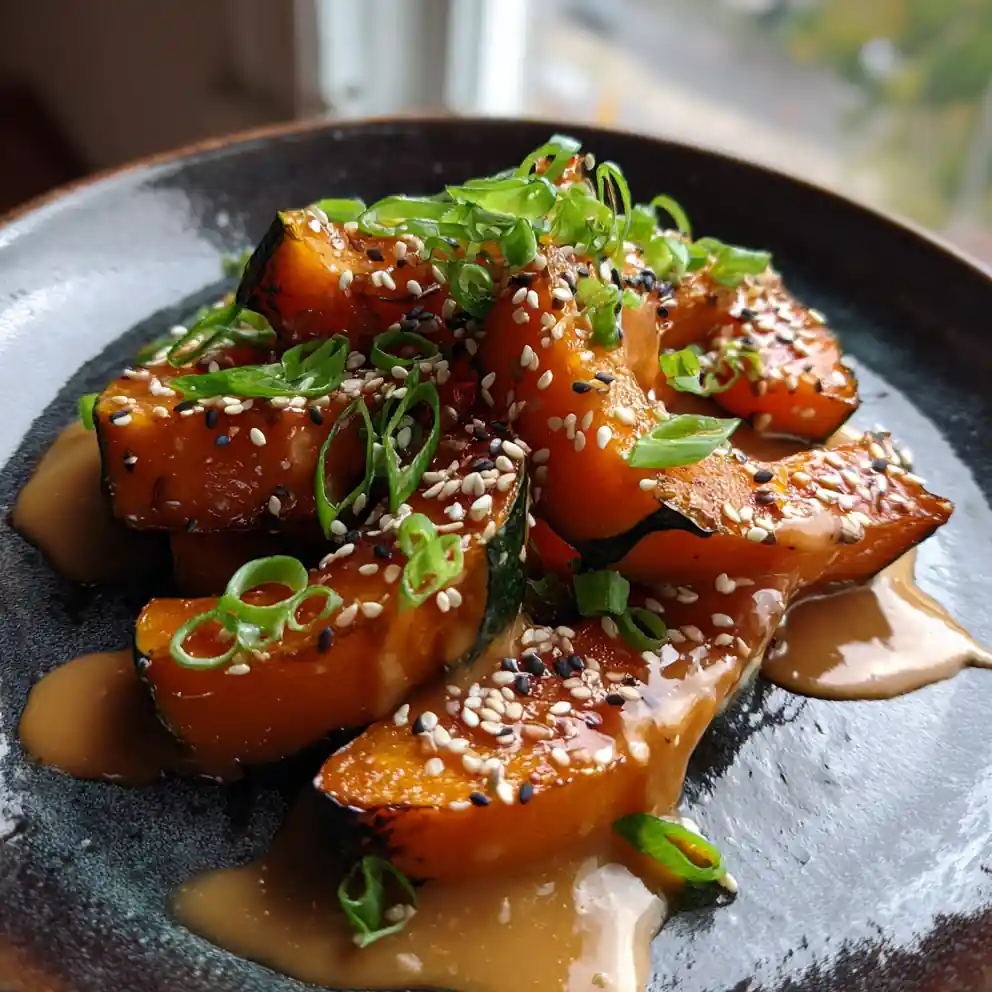
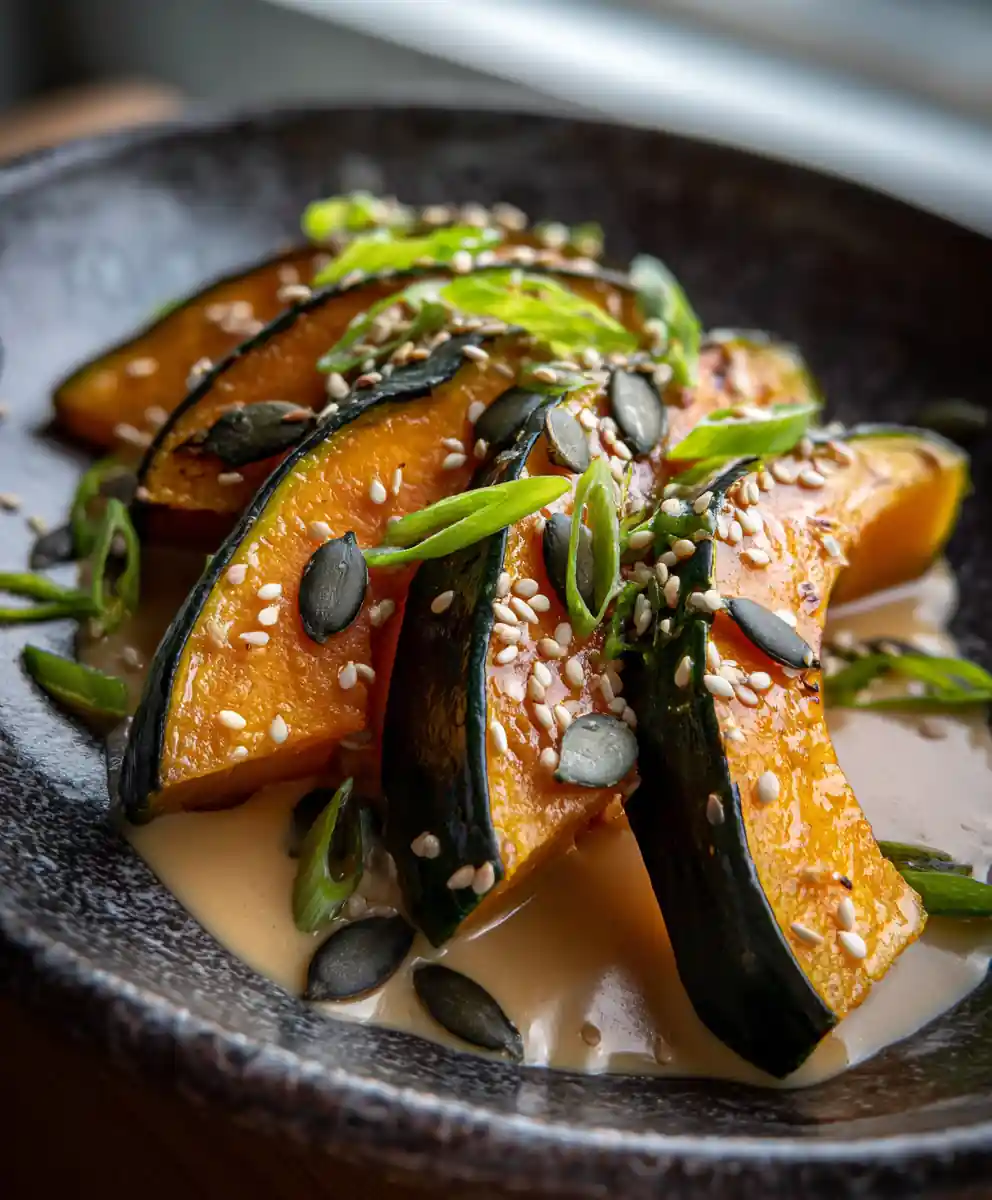
I think kabocha squash might be my favorite type of winter squash to cook with. This healthy japanese pumpkin recipe transforms a simple squash into a creamy, savory-sweet delight with a rich, glossy miso-tahini glaze. It’s a fantastic side dish for weeknight meals when you want something hearty and a bit more exciting than simple roasted vegetables. This recipe is incredibly simple, requiring minimal active time and just a handful of pantry staples to create a rich, complex flavor profile that appeals to adults and kids alike. The result is tender kabocha coated in a beautiful, glossy sauce—perfect for pairing with rice or a simple protein for easy dinner ideas.
Ingredients
- 1 medium kabocha squash (about 900 g / 2 lbs)
This type of winter squash has a firm, sweet flesh that holds its shape well when cooked. Look for a dark green, hard squash with no soft spots or discoloration for this japanese pumpkin recipe. The skin is edible and softens during cooking, so leave it on for texture and extra fiber. - 240 ml / 1 cup vegetable broth
Serves as the simmering liquid base, infusing the kabocha with savory flavor as it cooks. Use a low-sodium vegetable broth to better control the final salinity of the dish. You can substitute with dashi (traditional Japanese stock) for a more authentic flavor. - 45 ml / 3 tablespoons alcohol-free soy sauce
Provides the essential umami saltiness and deep, rich color to the simmering liquid. We specify alcohol-free to ensure a specific flavor profile and keep the recipe family-friendly. For a gluten-free option, ensure you use certified gluten-free tamari or soy sauce. - 30 ml / 2 tablespoons non-alcoholic mirin substitute
Adds a touch of sweetness and depth to balance the soy sauce in the cooking liquid. This is essential for creating the characteristic flavor profile of Japanese simmered dishes. - 15 g / 1 tablespoon granulated sugar
A small amount of sugar enhances the natural sweetness of the kabocha and balances the umami and savory notes. This helps create a more well-rounded flavor profile for the final dish. You can reduce this amount slightly if you prefer less sweetness. - 30 g / 2 tablespoons white miso paste
The foundation of the creamy glaze, providing salty-sweet flavor and depth. White miso (shiro miso) is milder and less salty than red miso (aka miso), allowing the other flavors to shine through. Ensure you are using fresh miso paste, as older paste can lose its potent flavor. - 30 g / 2 tablespoons tahini
Adds a rich, creamy, nutty base and body to the glaze, making it thick and decadent. Use a smooth, high-quality tahini for the best texture and flavor. If you prefer a different nut flavor, you could try almond butter as a substitute. - 15 ml / 1 tablespoon maple syrup
Provides additional natural sweetness to balance the miso and tahini in the glaze. You can adjust the amount based on your preference for sweetness. Agave nectar or honey can also be used as substitutes. - 5 ml / 1 teaspoon sesame oil
Adds a distinctive aromatic, toasty note to finish the glaze. A little goes a long way, so use sparingly to avoid overpowering the delicate flavors. Use toasted sesame oil for maximum aroma. - 1 green onion (scallion), thinly sliced, for garnish
Adds a pop of color and a fresh, allium bite to balance the richness of the glaze. Slice thinly on a bias for a visually appealing presentation. - 5 g / 1 teaspoon toasted white sesame seeds, for garnish
Provides a delicate crunch and nutty aroma to enhance the texture of the finished dish. Toast the seeds lightly in a dry pan beforehand for maximum flavor release.
Instructions
- Wash and prepare the kabocha squash. Thoroughly wash the outside of the kabocha squash to remove dirt and debris. Carefully cut the squash in half lengthwise, then use a spoon to scoop out all seeds and fibrous bits. Cut the halves into uniform 6-8 wedges, ensuring each piece is approximately 2-3 cm (1 inch) thick.
- Create the simmering liquid. In a medium saucepan or wide pot, combine the vegetable broth, alcohol-free soy sauce, non-alcoholic mirin substitute, and granulated sugar. Bring the mixture to a gentle simmer over medium heat, stirring continuously until the sugar is completely dissolved.
- Simmer the kabocha wedges. Carefully add the kabocha wedges to the simmering liquid, arranging them in a single layer if possible. Reduce the heat to low, cover the pot with a tight-fitting lid, and simmer for 15-20 minutes, or until the kabocha is fork-tender. Check periodically to ensure the liquid doesn’t evaporate completely; add a splash of water or broth if needed. I use a wide 10-inch saucepan for this recipe to make sure the wedges cook evenly.
- Prepare the creamy miso-tahini glaze. While the kabocha simmers, combine the white miso paste, tahini, maple syrup, and sesame oil in a small bowl. Whisk these ingredients together until they form a smooth, uniform paste. If the resulting mixture is too thick, reserve 1-2 tablespoons of the hot simmering liquid from the saucepan to thin it later.
- Reduce the sauce base and combine with the glaze. Once the kabocha is tender, carefully remove the wedges with tongs and set them aside on a plate. Increase the heat under the saucepan to medium-high and reduce the remaining simmering liquid by about half for 3-5 minutes, allowing it to concentrate. Reduce the heat back to low and stir in the prepared miso-tahini mixture until fully incorporated, creating a rich, opaque sauce. If the glaze looks too thin after combining, simply simmer uncovered for an extra 1-2 minutes to evaporate some moisture.
- Glaze the kabocha and serve. Return the cooked kabocha wedges to the saucepan with the glaze. Gently toss or spoon the creamy miso-tahini glaze over the kabocha, ensuring each piece is well coated. Simmer uncovered for another 2-3 minutes, allowing the glaze to lightly thicken and cling to the squash. Turn off the heat and let it rest for 5 minutes before serving this delicious japanese pumpkin recipe.
- Garnish for presentation. Arrange the glossy, glazed kabocha wedges on a serving plate or in a shallow bowl. Drizzle any remaining creamy glaze from the pan over the top of the squash. Garnish generously with thinly sliced green onions and toasted white sesame seeds for a vibrant color contrast and a nutty finish to this family-friendly japanese pumpkin recipe.
Tips for Cutting Kabocha Safely
Kabocha squash can be intimidating due to its hard exterior. Follow these safety precautions when cutting it to prevent injury and make the process easier.
- Start with a stable surface. Place the kabocha squash on a non-slip cutting board. If the squash wobbles, cut a thin slice off the bottom to create a stable, flat surface before proceeding with the main cut. Ensure your knife is very sharp, as a dull knife requires more force and increases risk of slippage.
- Use a scoring technique. Score the skin around the middle circumference of the kabocha first with a sharp knife. Then, follow the scored line, carefully rocking the knife back and forth to cut through the tough skin and flesh. A large chef’s knife or cleaver works best for breaking down winter squash.
- Microwave to soften (optional shortcut). If the squash is exceptionally hard, you can briefly soften the skin before cutting. Puncture the skin in several places with a fork or paring knife. Microwave the whole squash for 2-3 minutes (not until fully cooked), allowing it to cool slightly before attempting to cut.
Make-Ahead & Storage Tips
- Refrigeration: Store leftovers in an airtight container for up to 3 days. The flavor actually deepens overnight, making this japanese pumpkin recipe an excellent make-ahead side dish for healthy eating. Keep in mind that the kabocha may absorb more of the sauce as it sits, making it slightly softer. Store the garnished and glazed pieces together in the refrigerator.
- Reheating: Reheat gently to preserve texture. For best results, gently warm the glazed kabocha on the stovetop over low heat until heated through. Reheating too quickly or using high heat in the microwave can make the squash mushy. If the glaze has thickened significantly, add a small splash of water or broth during reheating to restore consistency.
- Freezing: Not recommended. Freezing cooked squash generally results in a change in texture upon thawing. The kabocha will become mushy and watery, losing its firm shape. It is best to consume this dish within 3 days for ideal flavor and texture.
Recipe Variations and Substitutions
- Change the sweetness level. For a less sweet glaze, reduce the maple syrup to 1 teaspoon or eliminate it entirely. For a sweeter, more dessert-like flavor, increase the maple syrup to 1 tablespoon and add a pinch of cinnamon to the glaze. Adjust the sugar in the simmering liquid based on the sweetness of your specific kabocha squash.
- Add protein for a full meal. To make this easy japanese pumpkin recipe a complete meal, add a serving of grilled salmon or chicken breast alongside the squash. For a plant-based option, stir in some firm tofu cubes during the last minutes of simmering to coat them in the glaze. Serve over a bowl of hot steamed rice to create a hearty rice bowl.
- Adjust the spices and seasonings. Add 1/2 teaspoon of grated fresh ginger to the glaze for a warming, spicy kick. Include a pinch of togarashi (Japanese seven-spice blend) in the glaze or as a final garnish for more heat. Try adding a small amount of roasted garlic powder for a savory depth.
FAQs
What is Japanese pumpkin (kabocha)?
Kabocha squash is a type of winter squash known for its hard, dark green skin and bright orange, sweet flesh. Its flavor profile is often compared to a cross between sweet potato and pumpkin. The texture is starchy, similar to russet potatoes, making it ideal for boiling or simmering as it holds its shape well.
Can I use other types of squash?
Yes, you can substitute other winter squashes like acorn squash or butternut squash. However, kabocha holds its structure better in this style of simmering, and its unique sweetness pairs best with the miso-tahini glaze. If using butternut squash, you may need to reduce the simmering time slightly as it cooks faster, but this japanese pumpkin recipe works best with kabocha.
Why do you leave the skin on the kabocha?
The skin of kabocha squash softens significantly during cooking and is completely edible. Leaving it on adds visual contrast, helps keep the wedges intact, and provides extra fiber and nutrients. It also saves time on preparation, avoiding the difficult task of peeling a hard winter squash for this japanese pumpkin recipe.
Is this recipe vegetarian or vegan?
Yes, this japanese pumpkin recipe is inherently vegan and vegetarian, provided you use vegetable broth. The non-alcoholic mirin substitute and alcohol-free soy sauce make it suitable for all family members. It also contains no dairy products, making it a great option for those with lactose sensitivities.
How do I make the glaze thinner or thicker?
If the glaze is too thick, thin it with a tablespoon or two of hot water or the simmering liquid. If the glaze is too thin after combining with the reduced liquid, simmer it uncovered for an extra 1-2 minutes to evaporate some moisture. I like to keep a bit of extra broth on hand to adjust the glaze consistency at the end, so I don’t accidentally thin it out too much.
What should I serve with this dish?
This creamy glazed kabocha is a perfect side dish for grilled fish (like cod or salmon) or chicken. It pairs wonderfully with hot steamed rice and a simple green salad for a balanced meal. For a Japanese-style meal, serve it alongside miso soup and a main protein.
Conclusion
This easy japanese pumpkin recipe with a creamy miso-tahini glaze offers a new take on a comforting classic that the whole family will love. It takes less than 30 minutes to prepare and is a wonderful way to incorporate healthy winter squash into your weekly menu. Pin this recipe and share your results in the comments below!
Print
japanese pumpkin recipe
- Total Time: 30 minutes
- Yield: 4 servings 1x
- Diet: Vegan
Description
This recipe features tender kabocha squash simmered in a savory liquid and coated in a creamy, glossy miso-tahini glaze. It’s an easy and healthy side dish that offers a perfect balance of savory and sweet flavors for weeknight meals.
Ingredients
- 1 medium kabocha squash (about 2 lbs), cut into wedges
- 1 cup vegetable broth
- 3 tablespoons alcohol-free soy sauce
- 2 tablespoons non-alcoholic mirin substitute
- 1 tablespoon granulated sugar
- 2 tablespoons white miso paste
- 2 tablespoons tahini
- 1 tablespoon maple syrup
- 1 teaspoon sesame oil
- 1 green onion (scallion), thinly sliced, for garnish
- 1 teaspoon toasted white sesame seeds, for garnish
Instructions
- Prepare Kabocha: Wash the squash thoroughly and cut it in half lengthwise. Scoop out all the seeds and fibrous material. Cut the halves into uniform wedges, approximately 1 inch thick.
- Simmer Liquid Prep: In a medium saucepan, combine the vegetable broth, soy sauce, non-alcoholic mirin substitute, and granulated sugar. Bring the mixture to a gentle simmer over medium heat, stirring until the sugar dissolves.
- Cook Kabocha: Carefully place the squash wedges into the simmering liquid. Reduce the heat to low, cover the pot with a tight-fitting lid, and simmer for 15-20 minutes, or until the squash is fork-tender.
- Make Glaze: While the squash simmers, combine the white miso paste, tahini, maple syrup, and sesame oil in a small bowl. Whisk until a smooth paste forms.
- Reduce Sauce and Glaze: Remove the cooked kabocha wedges from the pot and set aside. Increase the heat to medium-high to reduce the remaining simmering liquid by about half. Lower the heat and stir in the prepared miso-tahini paste until fully incorporated.
- Coat and Serve: Return the kabocha wedges to the saucepan. Gently toss the squash with the glaze until each piece is well coated. Simmer uncovered for 2-3 minutes to allow the glaze to thicken slightly. Let rest for 5 minutes before serving. Garnish with sliced green onions and toasted sesame seeds.
Notes
To make cutting the hard kabocha squash safer, cut a thin slice off the bottom to create a stable, flat surface on your cutting board. The skin of the kabocha squash softens significantly during cooking and is edible. For best results, reheat leftovers gently on the stovetop to avoid making the squash mushy; freezing is not recommended.
- Prep Time: 10 minutes
- Cook Time: 20 minutes
- Category: Side Dish
- Method: Simmering
- Cuisine: Japanese
Nutrition
- Serving Size: 1 serving
- Calories: 290kcal
- Sugar: 25g
- Sodium: 880mg
- Fat: 6.5g
- Saturated Fat: 1g
- Unsaturated Fat: 5g
- Trans Fat: 0g
- Carbohydrates: 53g
- Fiber: 7g
- Protein: 5g
- Cholesterol: 0mg
FREE PRINTABLE RECIPE
Get the Printable Recipe PDF (Free)
Enter your email and we’ll send you the ingredients + step-by-step instructions as a clean PDF you can save to your phone.
- ✅ Printable PDF (ingredients + steps)
- ✅ Save it to your phone (no long scrolling)
- ✅ Includes cook time + servings
- ✅ Easy to follow
FAQ
Where’s the full recipe?
It’s delivered as a printable PDF so you can save it and cook without scrolling.
I didn’t get the email.
Check Spam/Promotions and search your inbox for your site name. Then click Confirm to receive the PDF.