
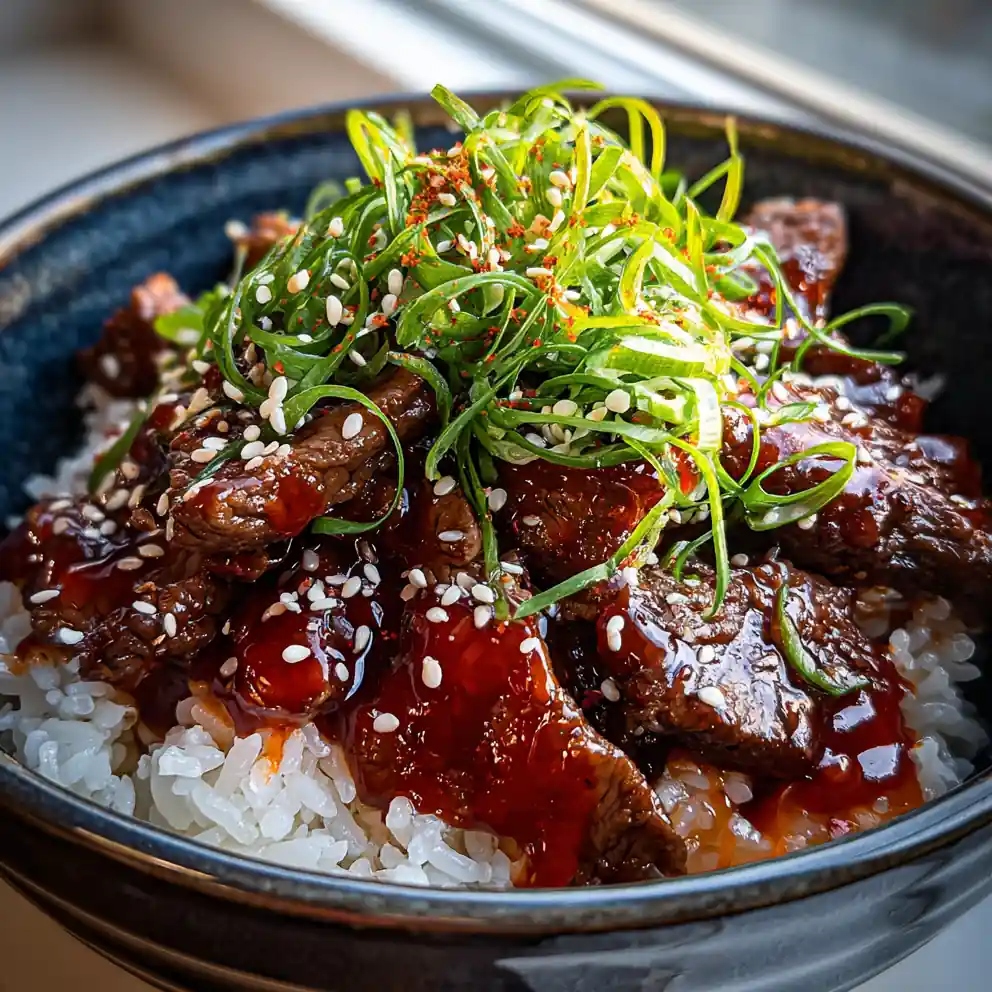
I love a meal that delivers on comfort food while also being ready in under 30 minutes, and this gochujang beef bowl recipe absolutely delivers. The aroma from the Gochujang-Kissed Savory Glaze alone is enough to make my family gather around the kitchen. This recipe provides maximum flavor with minimal effort, making it perfect for busy weeknights when you need something quick and hearty. It’s a satisfying, complete meal in one bowl, offering a delicious alternative to standard stir-fries. The secret is a balanced sauce that’s easy to assemble and coats every piece of beef beautifully, creating a truly memorable family-friendly dinner.
Ingredients
- 200 g / 1 cup uncooked short-grain rice: This rice variety creates the traditional sticky, slightly chewy base for a beef bowl. Rinse thoroughly before cooking until the water runs clear to remove excess starch. Cook according to package directions, typically 1 part rice to 1.25 parts water.
- 300 g / 10.5 oz very thinly sliced beef (chuck or ribeye): The thinness of the cut is key to making this recipe fast and tender. Look for pre-sliced beef at an Asian market or ask the butcher to slice it thin for you. Cutting against the grain ensures maximum tenderness and prevents toughness.
- 1 large onion (approx. 200 g / 7 oz), thinly sliced: The onions caramelize slightly, adding a sweet foundation to the savory sauce. Slice them uniformly thin to ensure they soften at the same rate as the beef cooks.
- 15 ml / 1 tablespoon vegetable oil: Use a neutral oil with a high smoke point for sautéing the vegetables and searing the beef quickly. Can substitute with canola oil or light olive oil if necessary.
- 30 g / 2 tablespoons gochujang (Korean chili paste): This is the star ingredient, providing the signature sweet heat and depth of flavor. Adjust the amount to control the spice level; use less for a milder taste for family-friendly meals.
- 45 ml / 3 tablespoons naturally brewed soy sauce: Use a high-quality, naturally brewed soy sauce for the best umami flavor in the glaze. (Look for alcohol-free options if needed, as some soy sauces contain trace amounts.)
- 30 ml / 2 tablespoons alcohol-free mirin-style seasoning: Mirin adds a necessary sweetness and gloss to the sauce, balancing the savory notes. Alcohol-free versions are readily available in most large supermarkets.
- 15 g / 1 tablespoon light brown sugar: Enhances the sweetness from the mirin and gochujang, creating a perfectly balanced savory glaze. (Can substitute with honey if preferred, but brown sugar provides a deeper molasses note.)
- 250 ml / 1 cup vegetable broth: Forms the base of the sauce, helping to hydrate the other ingredients and thicken during simmering. (Can substitute with water or beef broth, though vegetable broth keeps the flavor profile neutral.)
- 10 g / 2 cm piece fresh ginger, grated: Freshly grated ginger provides a bright, aromatic punch that cuts through the richness of the beef. Use a microplane or fine grater to incorporate it smoothly into the sauce.
- 2 cloves garlic, minced: Garlic is essential for a savory base; mince finely so it doesn’t overpower the other flavors. Avoid browning or burning the garlic when sautéing, as this creates a bitter taste.
- 5 ml / 1 teaspoon toasted sesame oil (optional): Adds a nutty finish and aromatic complexity at the very end of cooking. Stir in just before serving to preserve its flavor.
- 2 stalks green onions, thinly sliced diagonally, for garnish: Provides a fresh, sharp contrast in flavor and texture to the cooked beef and sauce. Slice on the diagonal for an aesthetically pleasing presentation.
- 2 g / 1 teaspoon Shichimi Togarashi, for garnish: A Japanese seven-spice blend that adds color and a gentle, complex heat to the beef bowl. If unavailable, substitute with a pinch of red pepper flakes or black pepper.
- 5 g / 1 teaspoon toasted white sesame seeds, for garnish: Adds a final layer of texture and a subtle nutty aroma when sprinkled over the finished bowl.
Instructions
- Cook the Rice and Prepare the Glaze. Rinse the short-grain rice under cold running water until the water runs completely clear; this prevents it from becoming gummy when cooked. Cook the rice according to package instructions, ideally in a rice cooker for a perfectly fluffy texture or a saucepan with a tight-fitting lid. While the rice cooks, whisk together the gochujang, soy sauce, alcohol-free mirin, brown sugar, vegetable broth, grated ginger, and minced garlic in a small bowl to form the Gochujang-Kissed Savory Glaze.
- Sauté the Onions and Sear the Beef. Heat the vegetable oil in a large skillet or wide pot over medium-high heat until shimmering. Add the thinly sliced onions and sauté for 3-5 minutes, stirring occasionally, until they become soft and translucent. Add the very thinly sliced beef to the skillet; spread the beef out evenly and cook for 1-2 minutes, stirring occasionally, just until it begins to brown slightly on the edges, ensuring the slices separate as they cook.
- Simmer and Thicken the Glaze. Pour the prepared Gochujang-Kissed Savory Glaze over the beef and onions in the skillet. Bring the mixture to a gentle simmer, then reduce the heat to medium-low to prevent the sauce from boiling rapidly. Let it simmer for 5-7 minutes, stirring occasionally, until the beef is tender and the sauce has reduced and thickened to a glossy consistency. If the sauce reduces too much before the beef is fully tender, add a splash of vegetable broth or water to thin it out slightly.
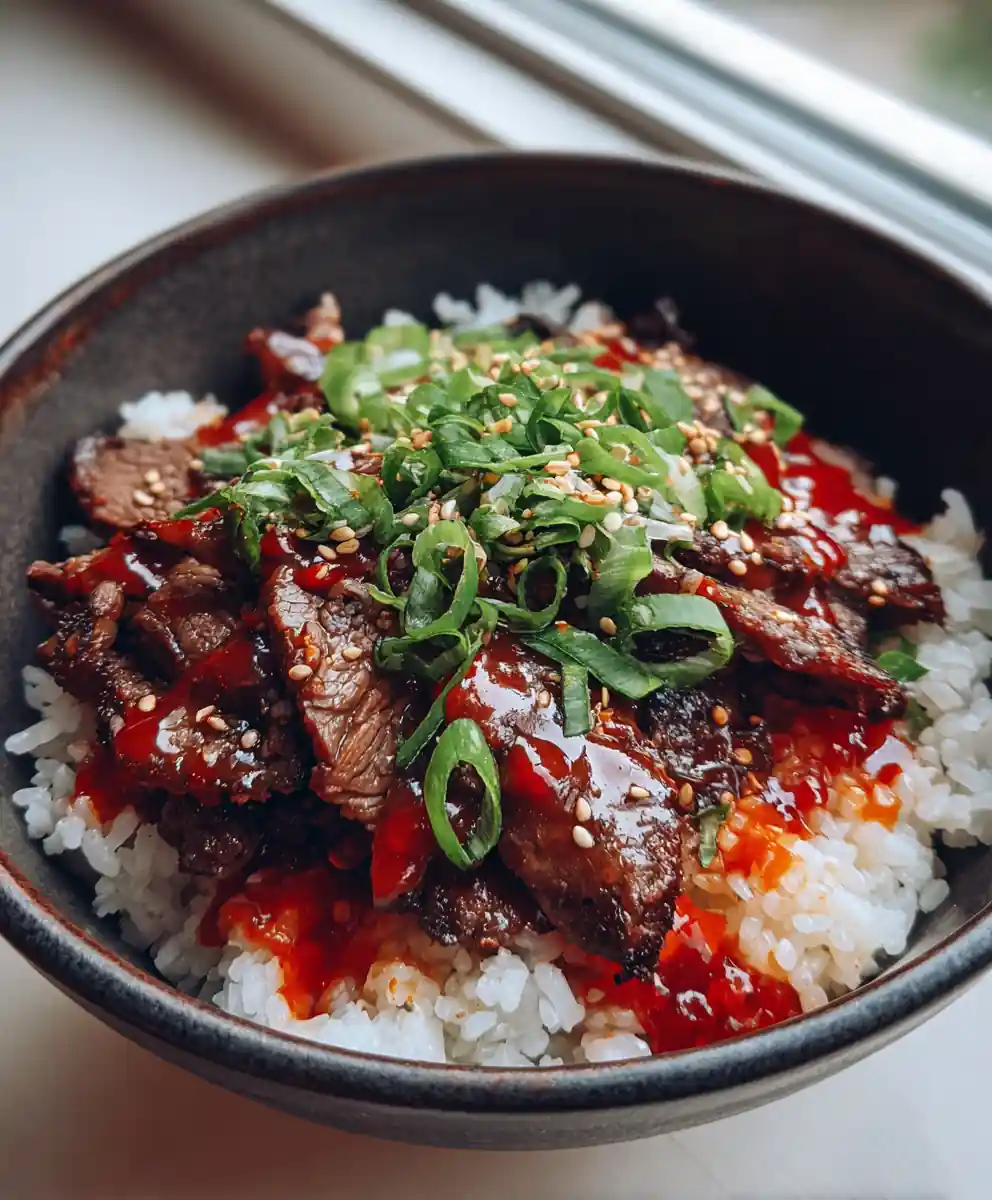
- Finish and Serve. Remove the skillet from the heat and stir in the toasted sesame oil (if using) just before serving. To plate, spoon a generous amount of fluffy cooked rice into a deep bowl; carefully arrange the gochujang-glazed beef and onions over the rice, allowing some sauce to seep into the rice. This easy beef bowl recipe is designed to be a quick, hearty meal.
- Garnish for Presentation. Garnish the beef bowl by scattering the thinly sliced green onions diagonally across the top for a fresh contrast. Lightly dust with Shichimi Togarashi for a hint of color and complex spice, then sprinkle with toasted white sesame seeds for added texture and aroma. My kids really love this beef bowl recipe, and I always make sure I have extra green onions for garnish, as they add a lovely fresh crunch to every bite.
Tips for Perfect Beef Bowl Textures
The success of this dish lies in the tenderness of the beef and the glossy coating of the sauce. Here are a few key techniques to ensure you get the perfect results every time.
Choose the Right Cut of Beef
The thinness of the cut is key to making this recipe fast and tender. Look for cuts like ribeye, chuck roll, or sirloin, and make sure they are sliced thinly against the grain. If you buy a larger piece, freeze it for 15 minutes before slicing; this makes cutting very thin strips much easier. The thin slices allow the beef to soak up the savory glaze quickly without becoming tough.
Avoid Overcooking the Beef
Because the beef slices are so thin, they cook very quickly in the hot skillet. If you overcook them initially, they will become tough and chewy during the simmering stage. Sear them for just 1-2 minutes until barely browned before adding the sauce. The meat will finish cooking during the sauce reduction step.
Achieving a Glossy Sauce
The balance of mirin and brown sugar in the sauce, combined with the reduction during simmering, creates the signature glossy finish. If your sauce is too thin after 7 minutes, remove the beef and onions first, then simmer the sauce for an additional minute to reduce further. This concentrates the flavors and creates the perfect coating for the beef bowl.
Making It Kid-Friendly (Adjusting the Spice)
This recipe can be easily adapted for younger palates. Gochujang provides a mild heat, but you can always adjust it or offer separate components for picky eaters.
The Gochujang Factor
Gochujang (Korean chili paste) provides a rich, complex flavor that is mildly spicy. To adapt this beef bowl recipe for young children or those sensitive to heat, reduce the gochujang from 2 tablespoons to 1 tablespoon, or substitute a portion of it with ketchup for a sweeter, milder flavor profile.
Mild Seasoning Variations
If reducing the gochujang isn’t enough, omit the Shichimi Togarashi garnish entirely. You can also add a small amount of honey or extra brown sugar to the glaze to counteract the spice level for younger palates. This sweetness balances the spice, making it a very family-friendly meal.
Deconstruct the Bowl
For picky eaters, serve the components separately: plain rice, plain seared beef (cook a small portion before adding the sauce), and a small side of the gochujang sauce for dipping. This lets everyone assemble their own perfect beef bowl.
Serving Suggestions and Variations
While the beef bowl is excellent on its own, it’s easy to add extra ingredients to round out the meal and increase the nutritional value. Here are some of my favorite ways to tweak this quick meal.
Add Vegetables
For a complete meal, add quick-cooking vegetables. Stir-fry mushrooms, sliced bell peppers, or broccoli florets in the skillet before adding the beef and onions. The sauce will coat all the ingredients beautifully, incorporating more healthy vegetables into the meal.
Egg Topping
For an extra protein boost, top the finished beef bowl with a soft-boiled egg, a poached egg, or a fried egg with a runny yolk. The yolk adds a rich creaminess to the savory sauce, enhancing the overall experience. This is a very popular addition for those who love high-protein snacks and meals.
Other Grains
While short-grain rice is traditional, this recipe is delicious over quinoa, brown rice, or even noodles for a different texture. Quinoa or brown rice add extra fiber and nutrition, making this beef bowl an even more wholesome meal option.
FAQs
Can I make this with ground beef?
Yes, you can substitute 450g (1 lb) of ground beef for the sliced beef. Cook the ground beef first, drain any excess fat, then add the onions and continue with the recipe. Ground beef works well for a different texture and is excellent for high-protein meals.
What if I don’t have mirin?
If you don’t have mirin, you can use sake with a pinch of sugar, or substitute with dry white wine mixed with a teaspoon of sugar for every tablespoon of liquid. The goal is to replicate the sweet and tangy notes that mirin provides to the beef bowl recipe.
How do I store leftovers?
Store leftover beef bowl components in airtight containers in the refrigerator for up to 3 days. Reheat gently in a skillet or microwave, adding a splash of water or broth if the sauce has thickened too much. I find that reheating in a skillet keeps the meat from overcooking and becoming tough.
Can I prepare this ahead of time?
Yes, this beef bowl recipe is great for meal prep. Cook the rice and beef mixture completely, store separately, and assemble when ready to serve. The sauce thickens as it cools, so reheat gently and add a splash of water or broth if necessary.
Is this recipe freezer-friendly?
The beef mixture freezes well for up to 3 months. Let it cool completely, then store in an airtight container or freezer-safe bag. Thaw in the refrigerator overnight before reheating. This makes it a quick and easy dinner idea for busy weeknights.
Can I make this low-carb?
Yes, easily. Serve the beef mixture over cauliflower rice instead of short-grain rice. To ensure the sauce stays low-carb, substitute the brown sugar with a low-carb sweetener like erythritol or monk fruit, using half the amount by volume since sweeteners are often more potent.
Conclusion
This easy gochujang beef bowl recipe provides the ultimate solution for a quick and satisfying meal that’s far from boring. The savory, slightly sweet glaze transforms simple ingredients into a rich, flavorful experience that the whole family will love. Make this recipe this week, and don’t forget to save it for future meal planning on Pinterest!
Print
beef bowl recipe
- Total Time: 25 minutes
- Yield: 2 servings 1x
- Diet: General
Description
A quick and easy gochujang beef bowl featuring thinly sliced beef coated in a savory-sweet glaze, perfect for a satisfying weeknight meal in under 30 minutes.
Ingredients
- 1 cup (200 g) short-grain rice, rinsed
- 10.5 oz (300 g) very thinly sliced beef (chuck or ribeye)
- 1 large onion (approx. 7 oz / 200 g), thinly sliced
- 1 tablespoon (15 ml) vegetable oil
- 2 tablespoons (30 g) gochujang (Korean chili paste)
- 3 tablespoons (45 ml) soy sauce
- 2 tablespoons (30 ml) alcohol-free mirin-style seasoning
- 1 tablespoon (15 g) light brown sugar (or honey)
- 1 cup (250 ml) vegetable broth
- 1 piece (2 cm) fresh ginger, grated
- 2 cloves garlic, minced
- 1 teaspoon (5 ml) toasted sesame oil (optional)
- 2 stalks green onions, sliced diagonally, for garnish
- 1 teaspoon (2 g) Shichimi Togarashi (optional), for garnish
- 1 teaspoon (5 g) toasted white sesame seeds, for garnish
Instructions
- Prepare Rice and Glaze: Rinse the short-grain rice until the water runs clear, then cook according to package directions. While rice cooks, whisk together the gochujang, soy sauce, mirin, brown sugar, vegetable broth, grated ginger, and minced garlic in a bowl to create the glaze.
- Sear Beef and Soften Onions: Heat vegetable oil in a large skillet over medium-high heat. Add the thinly sliced onions and sauté for 3-5 minutes until translucent. Add the thinly sliced beef and cook for 1-2 minutes, stirring occasionally, until it just starts to brown.
- Simmer Glaze to Thicken: Pour the prepared glaze over the beef and onions in the skillet. Bring the mixture to a gentle simmer, then reduce heat to medium-low. Simmer for 5-7 minutes, stirring occasionally, until the sauce reduces and thickens to a glossy consistency.
- Finish and Assemble Bowl: Remove the skillet from the heat and stir in the toasted sesame oil (if using) just before serving. Spoon a generous amount of cooked rice into deep bowls, then arrange the gochujang-glazed beef and onions over the rice.
- Garnish for Presentation: Garnish the beef bowl by scattering the sliced green onions, Shichimi Togarashi, and toasted white sesame seeds across the top before serving.
Notes
Ensure beef slices are cut against the grain for tenderness. For a less spicy dish, reduce gochujang to 1 tablespoon or substitute a portion with ketchup. Avoid overcooking the thin beef slices; sear briefly before simmering in the glaze. If the sauce is too thin, remove the beef and reduce the sauce separately for a minute or two.
- Prep Time: 10 minutes
- Cook Time: 15 minutes
- Category: Main Course
- Method: Skillet, Stir-fry
- Cuisine: Korean
Nutrition
- Serving Size: 1 bowl
- Calories: 650 calories
- Sugar: 15 g
- Sodium: 1800 mg
- Fat: 30 g
- Saturated Fat: 10 g
- Unsaturated Fat: 20 g
- Trans Fat: 0 g
- Carbohydrates: 50 g
- Fiber: 2 g
- Protein: 35 g
- Cholesterol: 150 mg
FREE PRINTABLE RECIPE
Get the Printable Recipe PDF (Free)
Enter your email and we’ll send you the ingredients + step-by-step instructions as a clean PDF you can save to your phone.
- ✅ Printable PDF (ingredients + steps)
- ✅ Save it to your phone (no long scrolling)
- ✅ Includes cook time + servings
- ✅ Easy to follow
FAQ
Where’s the full recipe?
It’s delivered as a printable PDF so you can save it and cook without scrolling.
I didn’t get the email.
Check Spam/Promotions and search your inbox for your site name. Then click Confirm to receive the PDF.