
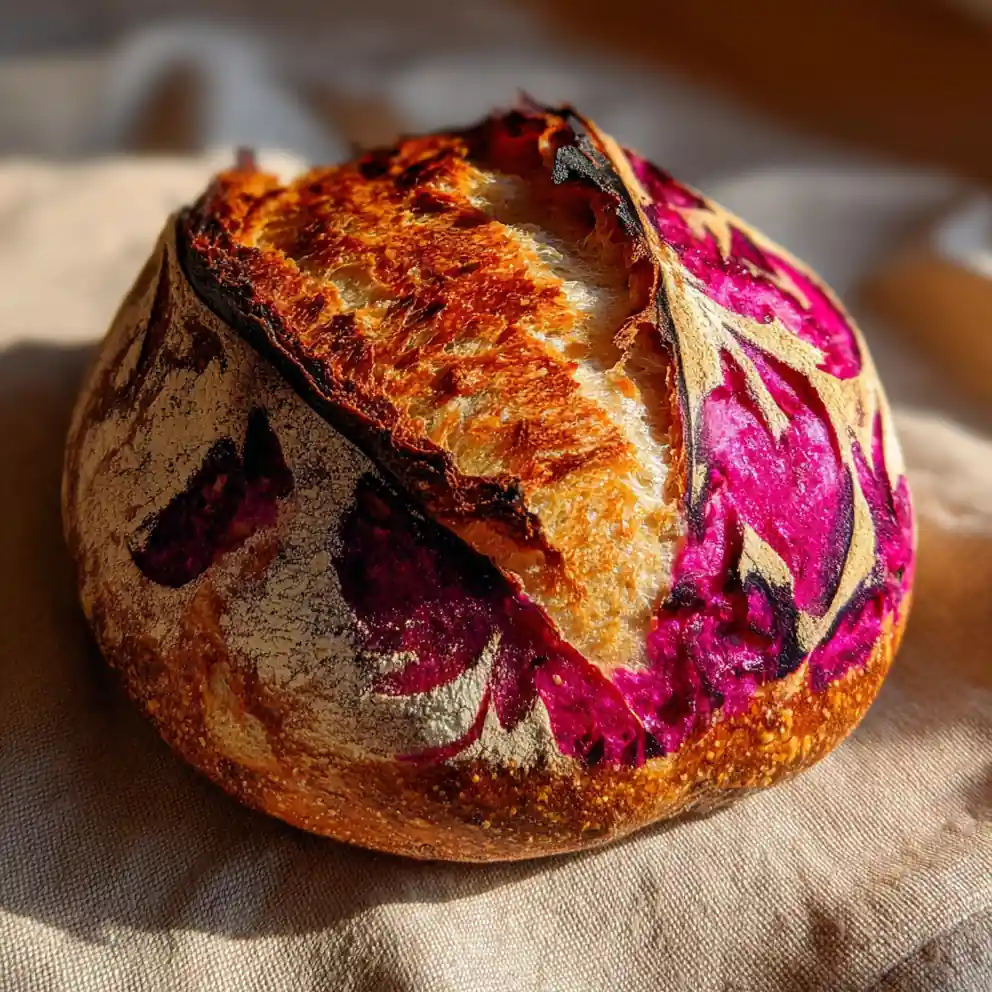
I’ve found true satisfaction in mastering the humble loaf, and I’m thrilled to share my favorite basic sourdough bread recipe with Beetroot Marble Crust with you. This isn’t just another bread; it’s a culinary canvas, showcasing a stunning, naturally colored swirl that elevates any meal. Perfect for home bakers and family-friendly eating, this basic sourdough bread recipe with Beetroot Marble Crust guides you to create a showstopping, hearty loaf that truly impresses. Get ready to bake a unique sourdough that will delight everyone at your table, making weekend breakfasts or special dinners memorable.
Ingredient Essentials & Functional Benefits
For a reliable and delicious loaf, quality ingredients are key. My recipes prioritize fresh, functional elements, ensuring a wholesome and satisfying result.
Core Ingredients & Their Roles:
- 500g strong bread flour (3 ½ cups): Provides the essential structure and satisfying chew.
- 100g whole wheat flour (¾ cup): Adds depth of flavor, color, and valuable nutrition.
- 10-20g beetroot powder (1-2 Tbsp): Creates the vibrant, natural coloring for the marble effect (or use spinach powder for a subtle green swirl).
- 375g filtered water (1 ½ cups + 2 Tbsp): Essential for dough hydration and gluten development.
- 10g sea salt (1 ½ tsp): Crucial for flavor, strengthening the dough, and regulating fermentation speed.
- 100g active sourdough starter (½ cup): The leavening agent that imparts complex flavors and rise (ensure it’s bubbly and active, or try a mature rye starter for a tangier note).
- Olive oil (1 tsp): Used solely for greasing the bowl during bulk fermentation, preventing sticking.
Premium Choices:
Opt for organic bread flour and a high-quality sea salt to achieve the best flavor and texture in your basic sourdough bread recipe.
Substitutions for Different Diets:
- Gluten-Free: Replace all-purpose and whole wheat flours with a 1:1 gluten-free bread flour blend. Ensure your sourdough starter is also gluten-free.
- Whole Grain Boost: Increase whole wheat flour up to 200g (1 ½ cups), adjusting water slightly as needed for dough consistency.
- Other Natural Colors: Experiment with spinach powder for green, turmeric for yellow, or butterfly pea flower powder for blue/purple effects.
Notes on Sourcing:
Find beetroot powder in health food stores or online. Always ensure your sourdough starter is active and bubbly, floating in water, before beginning this basic sourdough bread recipe.
Step-by-Step Cooking Instructions
Step 1: Prepare the Dough (Morning, Day 1)
- In a large bowl, combine the strong bread flour, whole wheat flour, and 350g (1 ½ cups – 1 Tbsp) of filtered water until just combined into a shaggy dough.
- Cover the bowl and let the mixture rest (autolyse) for 30 minutes at room temperature, allowing the flours to fully hydrate.
- Add 100g (½ cup) active sourdough starter and 10g (1 ½ tsp) sea salt to the dough. Mix thoroughly, using wet hands, until fully incorporated and the dough feels slightly sticky.
- Cover and rest again for 30 minutes, allowing the ingredients to blend and gluten development to begin.
Step 2: Develop Strength with Folds (Day 1)
- Perform 3-4 sets of stretch and folds every 30-45 minutes. Gently pull a portion of the dough up and fold it over itself into the center, rotating the bowl a quarter turn.
- The dough will progressively become smoother, stronger, and more elastic with each set.
- After the final fold, allow the dough to bulk ferment at room temperature (around 70-75°F / 21-24°C) for 4-6 hours. It should increase in volume by about 30-50% and show visible bubbles on the surface and sides of the bowl.
Step 3: Create the Marble Effect (Late Afternoon, Day 1)
- Gently divide your basic sourdough dough into two unequal portions; aim for roughly 2/3 plain dough and 1/3 for coloring.
- In the smaller portion, sprinkle in the beetroot powder. Gently fold the dough a few times until the vibrant color is evenly distributed without overmixing, which can make it tough.
- Stack the colored dough on top of the plain dough in the bowl. Perform one or two very gentle folds to create distinct swirls, being careful not to fully combine the colors.
Step 4: Shape & Proof (Evening, Day 1 to Morning, Day 2)
- Lightly flour your work surface. Carefully turn out the marbled dough and gently preshape it into a round. Allow it to rest uncovered for 20 minutes, which helps the gluten relax.
- Perform a final shape, creating good tension on the dough surface. My technique involves pulling the edges to the center and then rotating to build surface tension.
- Place the shaped dough seam-side up into a well-floured banneton or a bowl lined with a floured kitchen towel.
- Cold proof in the refrigerator for 12-16 hours. This develops deep flavor and firms up the dough, making it much easier to handle for scoring and transfer.
Step 5: Bake Your Marbled Loaf (Morning, Day 2)
- Preheat your oven to 475°F (245°C) with a Dutch oven inside for at least 30 minutes; this ensures even heat.
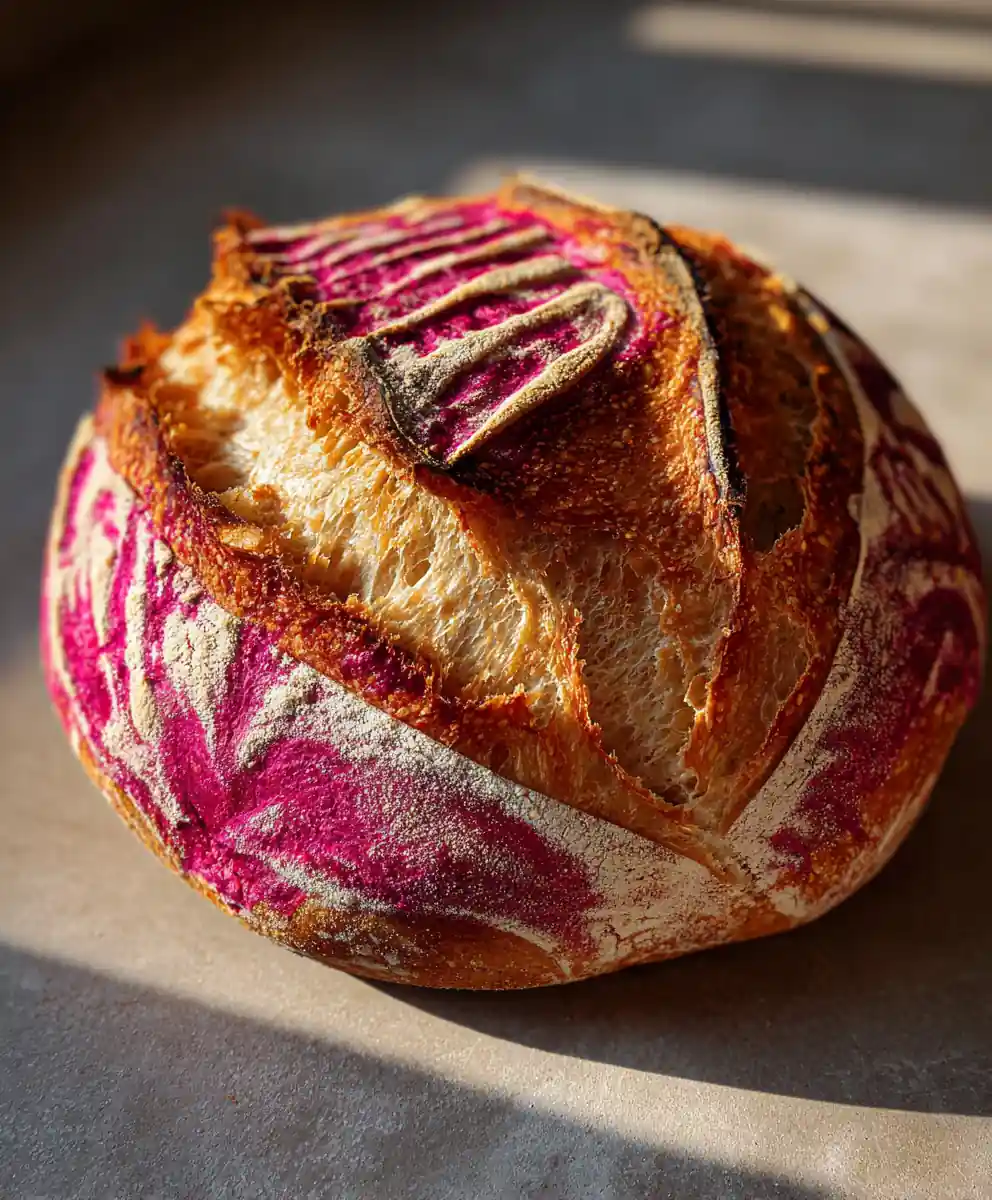
- Carefully invert the cold dough into the hot Dutch oven. Use a sharp blade or lame to score the top with your desired pattern, allowing for steam release and beautiful expansion.
- Bake covered for 20 minutes to trap steam and promote oven spring.
- Uncover and continue baking for another 30-35 minutes until the crust is deep golden brown and the internal temperature reaches 200-210°F (93-99°C). If your crust isn’t darkening as desired, bake a few minutes longer uncovered. If the marble isn’t as defined as you hoped, try fewer, gentler folds next time for a more dramatic swirl in your basic sourdough bread with Beetroot Marble Crust.
Step 6: Cool Completely
- Immediately transfer your beautiful basic sourdough bread to a wire rack.
- Cool for at least 2 hours before slicing. This step is crucial for the internal crumb structure to set and for the flavors to fully develop. Cutting too early can result in a gummy texture.
Best Ways & Times to Serve Your Basic Sourdough Bread with Beetroot Marble Crust
This beautiful loaf is perfect for a special weekend breakfast or impressive homemade sandwiches. Serve it alongside a hearty soup for dinner, or make it a stunning centerpiece for gatherings and festive meals.
- Pairings: Enjoy thick slices with a smear of good butter, creamy avocado, homemade jam, or a drizzle of quality olive oil. It also pairs wonderfully with a varied cheese platter or as a side to rich stews for a satisfying meal.
- Storage Tips: For optimal freshness, store your basic sourdough bread recipe with Beetroot Marble Crust at room temperature in an airtight bread bag for 3-4 days. For longer storage, slice the loaf and freeze portions in a freezer-safe bag for up to 3 months. Reheat slices gently in a toaster or oven.
Health & Lifestyle Value
The fermentation process in sourdough makes its nutrients more bioavailable, and the bread is often easier to digest than conventional loaves, contributing to healthy eating habits.
- Whole Grain Benefits: Incorporating whole wheat flour adds essential fiber and minerals, boosting the nutritional profile of this wholesome bread.
- Family-Friendly Fun: Baking this basic sourdough bread recipe with Beetroot Marble Crust is a fun way to get kids involved in the kitchen and encourage them to eat naturally colorful, homemade foods.
- Satisfying & Wholesome: A hearty, fulfilling loaf like this supports mindful eating and provides sustained energy.
- Supports Healthy Meal Prep: Prepare a batch of this bread ahead of time and freeze it for quick, healthy options throughout the week, making meal prep recipes easier.
Budget & Meal Planning Advantages
- Prep vs. Cook Time: Active preparation for this basic sourdough bread recipe is about 45 minutes spread over Day 1. Passive fermentation and proofing take 16-22 hours, with a bake time of 50-55 minutes.
- Cost Per Serving: Making your own sourdough is significantly more cost-effective than purchasing artisanal loaves from a bakery, especially for family dinners. Flour, water, and salt are inexpensive staples.
- Money-Saving Swaps: Consider making your own sourdough starter from scratch, which is a simple and rewarding process. Buying flour in bulk can also lead to considerable savings.
- Weekly Meal Prep Strategies: Batch bake 2-3 loaves to enjoy fresh and freeze the rest for future meals. This method is ideal for freezer stocking and easy dinner ideas.
Ingredient Shopping & Online Options
- Where to Buy:
- Local Stores: Strong bread flour and whole wheat flour are widely available. Good quality sea salt is found in most grocery aisles.
- Health Food Stores/Online: Beetroot powder and specialized bread flours can be sourced from these outlets.
- Farmers Markets: You might find local, organic flours here, which can enhance the flavor.
- When to Choose: High-quality bread flour is key for optimal structure. For the vibrant beetroot marble crust, a fine beetroot powder gives the best, most even color dispersion.
- Mentions: Explore online artisan flour suppliers or subscription boxes for unique flours. If you don’t have your own, look for active sourdough starter cultures online or at specialty stores.
Pro Tips & Adjustments
- Cooking Refinements:
- For a super crispy crust, spritz the dough with water before baking or add ice cubes to a tray in your 10-inch skillet (Dutch oven) during the first few minutes of baking.
- Experiment with different scoring patterns using a lame for a unique, beautiful look on your loaf.
- Adjust Seasoning: For low-sodium diets, reduce the salt in your basic sourdough bread recipe to 8g. For a bolder flavor profile, you can increase it slightly to 12g.
- Allergy-Safe Modifications: Always ensure your sourdough starter is certified gluten-free if you are using gluten-free flours. Double-check all ingredients for cross-contamination if severe allergies are a concern.
FAQs
Can I meal-prep my basic sourdough bread loaves for the week?
Yes, absolutely! This is a fantastic bread for healthy meal prep. Bake ahead and freeze sliced portions in a freezer-safe bag. This provides quick access to wholesome bread and helps preserve its freshness for up to 3 months. Reheat slices gently in a toaster or oven as needed.
Where can I buy quality ingredients for this basic sourdough bread recipe?
You’ll find strong bread flours and good quality sea salt at most grocery stores. For specialized items like beetroot powder and unique bread flours, health food stores or online retailers are excellent sources. Organic ingredients often provide the best results for a premium loaf.
Is this basic sourdough bread recipe with Beetroot Marble Crust suitable for a healthy diet?
Absolutely! Sourdough is prized for its improved digestibility and beneficial probiotics from fermentation. The beetroot provides natural color without artificial additives. This makes it a great addition to a healthy diet, especially when practiced with mindful portion control.
What are common issues with a basic sourdough bread recipe and how do I fix them?
Common issues include sticky dough, which can be managed by using wet hands during handling. An under-proofed dough often results in a dense crumb; extend bulk fermentation next time. A flat loaf usually indicates insufficient dough tension during shaping; practice building more surface tension.
How do I get a more vibrant Beetroot Marble Crust?
To achieve a more striking Beetroot Marble Crust, ensure your beetroot powder is fresh and of high quality. You can also use a slightly higher amount for a deeper color. The key is to be very gentle with mixing the colored dough to maintain distinct marbling; I find just one or two gentle folds are enough.
Can I use a different natural colorant in my basic sourdough bread recipe?
Yes, spinach powder for green or turmeric for yellow are great alternatives for natural coloring. For a stunning blue or purple marble effect, try butterfly pea flower powder. These natural options make a visually appealing and healthy loaf.
How do I maintain my sourdough starter for this recipe?
Maintaining an active starter is crucial for any sourdough bread recipe. Feed your starter regularly, at least once a week if it’s refrigerated. Before baking, ensure it’s active, bubbly, and passes the float test (a small dollop floats in water). A strong starter guarantees a good rise.
Conclusion
Baking your own basic sourdough bread recipe with Beetroot Marble Crust is a deeply rewarding journey, resulting in a beautiful, healthy, and incredibly flavorful loaf that truly elevates your family’s table. I always love seeing the surprise on faces when I slice into a marbled loaf. Don’t wait—pin this recipe and plan to make this stunning loaf part of your healthy eating and weekly meal prep rotation!
Print
basic sourdough bread recipe with Beetroot Marble Crust
- Total Time: 1470 minutes
- Yield: 1 loaf (8-10 servings) 1x
- Diet: General
Description
This recipe creates a stunning, hearty sourdough loaf featuring a naturally colored beetroot marble crust, perfect for impressing guests. It’s a family-friendly guide for home bakers to craft a unique and visually appealing bread.
Ingredients
- 3.5 cups strong bread flour, (500 g)
- 0.75 cup whole wheat flour, (100 g)
- 1.5 Tbsp beetroot powder, (15 g)
- 1.625 cups filtered water, (375 g)
- 1.5 tsp sea salt, (10 g)
- 0.5 cup active sourdough starter, (100 g)
- 1 tsp olive oil, for greasing
Instructions
- Prepare The Dough: In a large bowl, combine the strong bread flour, whole wheat flour, and 1.5 cups minus 1 Tbsp (350 g) of filtered water until just combined into a shaggy dough. Cover the bowl and let the mixture rest (autolyse) for 30 minutes at room temperature, allowing the flours to fully hydrate. Add the active sourdough starter and sea salt to the dough. Mix thoroughly, using wet hands, until fully incorporated and the dough feels slightly sticky. Cover and rest again for 30 minutes, allowing the ingredients to blend and gluten development to begin.
- Develop Strength With Folds: Perform 3-4 sets of stretch and folds every 30-45 minutes. Gently pull a portion of the dough up and fold it over itself into the center, rotating the bowl a quarter turn. The dough will progressively become smoother, stronger, and more elastic with each set. After the final fold, allow the dough to bulk ferment at room temperature (around 70-75°F / 21-24°C) for 4-6 hours. It should increase in volume by about 30-50% and show visible bubbles on the surface and sides of the bowl.
- Create The Marble Effect: Gently divide your dough into two unequal portions; aim for roughly 2/3 plain dough and 1/3 for coloring. In the smaller portion, sprinkle in the beetroot powder. Gently fold the dough a few times until the vibrant color is evenly distributed without overmixing. Stack the colored dough on top of the plain dough in the bowl. Perform one or two very gentle folds to create distinct swirls, being careful not to fully combine the colors.
- Shape And Proof: Lightly flour your work surface. Carefully turn out the marbled dough and gently preshape it into a round. Allow it to rest uncovered for 20 minutes. Perform a final shape, creating good tension on the dough surface by pulling the edges to the center and then rotating to build surface tension. Place the shaped dough seam-side up into a well-floured banneton or a bowl lined with a floured kitchen towel. Cold proof in the refrigerator for 12-16 hours to develop deep flavor and firm up the dough.
- Bake Your Marbled Loaf: Preheat your oven to 475°F (245°C) with a Dutch oven inside for at least 30 minutes. Carefully invert the cold dough into the hot Dutch oven. Use a sharp blade or lame to score the top with your desired pattern. Bake covered for 20 minutes. Uncover and continue baking for another 30-35 minutes until the crust is deep golden brown and the internal temperature reaches 200-210°F (93-99°C).
- Cool Completely: Immediately transfer your baked bread to a wire rack. Cool for at least 2 hours before slicing. This step is crucial for the internal crumb structure to set and for the flavors to fully develop; cutting too early can result in a gummy texture.
Notes
Ensure your sourdough starter is active and bubbly, floating in water, before beginning. For a more dramatic marble swirl, try fewer, gentler folds when incorporating the colored dough. Store cooled bread at room temperature in a bread bag for up to 3 days, or freeze for longer storage.
- Prep Time: 60 minutes
- Cook Time: 55 minutes
- Category: Bread
- Method: Baking
- Cuisine: General
Nutrition
- Serving Size: 1 slice (80 g)
- Calories: 280 calories
- Sugar: 1 g
- Sodium: 350 mg
- Fat: 3 g
- Saturated Fat: 0.5 g
- Unsaturated Fat: 2.5 g
- Trans Fat: 0 g
- Carbohydrates: 50 g
- Fiber: 4 g
- Protein: 9 g
- Cholesterol: 0 mg
FREE PRINTABLE RECIPE
Get the Printable Recipe PDF (Free)
Enter your email and we’ll send you the ingredients + step-by-step instructions as a clean PDF you can save to your phone.
- ✅ Printable PDF (ingredients + steps)
- ✅ Save it to your phone (no long scrolling)
- ✅ Includes cook time + servings
- ✅ Easy to follow
FAQ
Where’s the full recipe?
It’s delivered as a printable PDF so you can save it and cook without scrolling.
I didn’t get the email.
Check Spam/Promotions and search your inbox for your site name. Then click Confirm to receive the PDF.