
I know how frustrating it can be to try and make a good gluten free sourdough recipe that actually tastes like the real thing.
If you thought a truly artisanal sourdough loaf was out of reach on a gluten-free diet, prepare to be amazed by this hearty version. This specific gluten free sourdough recipe combines the satisfying tang of sourdough with a rich, aromatic swirl of roasted garlic and fresh rosemary, making it the perfect centerpiece for any meal. We tackle the challenges of gluten-free baking head-on by using psyllium husk powder to create structure, resulting in a perfectly chewy crumb and a crust that truly rivals traditional loaves. The extra step of roasting the garlic is absolutely worth it; it transforms the flavor into something truly comforting and unforgettable for family dinners.
Ingredients
- 150 g (5.3 oz) Active Gluten-Free Sourdough Starter
This is a crucial first step—ensure your starter is active and bubbly, meaning it has recently been fed and has roughly doubled in size.
For best results, use a starter made from a gluten-free blend like brown rice or sorghum flour for optimal fermentation and flavor development.
A healthy, active starter provides both leavening and the complex sourdough flavor we’re aiming for. - 380 g (1 ¾ cups) Warm Water (35-40°C / 95-105°F)
The temperature of the water is essential for activating the yeast and ensuring a strong rise in gluten-free baking.
Water that is too hot will kill the yeast, while water that is too cold will inhibit its activity.
Use a kitchen thermometer to ensure accuracy and avoid guesswork. - 450 g (3 ½ cups) Gluten-Free Bread Flour Blend
Use a specific blend designed for bread making, often containing brown rice flour, sorghum flour, tapioca starch, and potato starch.
Avoid blends that rely heavily on cornstarch or bean flours, which can result in a gummy texture or unwanted flavors.
The specific combination of flours and starches provides the best possible structure for this healthy gluten free sourdough recipe. - 25 g (3 tablespoons) Psyllium Husk Powder
This ingredient is critical for replicating the structural role of gluten in wheat-based bread.
Do not substitute with psyllium husks (whole or ground); the powder form is necessary for binding and hydration.
It creates a gel-like structure when mixed with water, which traps gases and provides chewiness. - 10 g (1 ½ teaspoons) Fine Sea Salt
Salt not only enhances the flavor but also helps control the fermentation rate of the starter.
Use fine sea salt or kosher salt; table salt often contains anti-caking agents that can interfere with the rise.
Ensure the salt is well incorporated into the dough mixture for even distribution. - 15 g (1 tablespoon) Olive Oil, plus 30 ml (2 tablespoons) for roasting garlic
The oil adds richness to the dough, improves moisture retention, and contributes to a softer crust.
Using high-quality extra virgin olive oil for both the dough and the roasting process will enhance the overall flavor profile. (You can also use avocado oil if that’s what you keep on hand for cooking.) - 2 whole heads Garlic
Roasting whole heads of garlic transforms the cloves from pungent and sharp to sweet, soft, and nutty.
This process requires whole, unpeeled heads; do not use pre-peeled cloves.
The roasted garlic forms the aromatic base of the swirl, providing a depth of flavor that complements the sourdough tang. - 2 tablespoons Fresh Rosemary, finely chopped, plus 2-3 sprigs for garnish
Fresh rosemary provides a vibrant, earthy aroma that pairs perfectly with the roasted garlic.
Using fresh herbs is essential for this recipe; dried rosemary will not achieve the same intense flavor or texture within the swirl.
Reserve a few sprigs for garnish after baking to add visual appeal. - 1 teaspoon Coarse Sea Salt, for garnish
This is used to finish the presentation of the loaf, adding a professional, rustic touch.
The coarse salt provides a bright, crunchy texture when sprinkled over the finished bread for serving.
Instructions
- Roast the garlic for the swirl: Preheat your oven to 180°C (350°F) and prepare the garlic heads by slicing off the very top, exposing the individual cloves slightly.
Drizzle the 30 ml (2 tablespoons) of olive oil over the cut surfaces, wrap loosely in aluminum foil, and roast for 45-60 minutes, or until the cloves are very soft and golden brown.
Once cooled slightly, squeeze the cloves from their skins into a small bowl, mash thoroughly with a fork, and stir in the 2 tablespoons of finely chopped fresh rosemary and a pinch of fine sea salt; set this mixture aside. - Hydrate the starter in a large mixing bowl: Combine the 150 g active gluten-free sourdough starter and the 380 g warm water in a large bowl.
Whisk thoroughly until the starter is mostly dissolved and incorporated into the water.
This step ensures even distribution of the yeast throughout the dough. - Mix the dough and incorporate the binding ingredients: Add the gluten-free bread flour blend, psyllium husk powder, 10 g fine sea salt, and 15 g olive oil to the bowl.
Use a sturdy spoon or a stand mixer with a paddle attachment on low speed to mix for 5-7 minutes until a cohesive, sticky dough forms.
The dough consistency for this specific gluten free sourdough recipe will differ significantly from wheat-based dough; it will feel more like a thick batter or paste at this stage. - Perform bulk fermentation with stretch and folds: Cover the bowl with a clean kitchen towel or plastic wrap and let the dough rest at room temperature (20-24°C / 68-75°F) for 3-4 hours.
During this time, perform a stretch and fold every 45 minutes for the first 2 hours to develop structure and strength.
To stretch and fold, wet your hands slightly, grab a portion of the dough, pull it upwards, and fold it over itself; rotate the bowl and repeat this 4-5 times. - Shape the dough and add the roasted garlic swirl: After bulk fermentation, lightly dust a clean work surface with gluten-free flour and gently turn the dough out onto the surface.
Gently pat the dough into a rough rectangle, about 1.5 cm (½ inch) thick, ensuring even thickness across the surface.
Evenly spread the roasted garlic and rosemary mixture over the entire rectangle, leaving a small border around the edges. - Roll the dough and form the loaf shape: Carefully roll the dough tightly from one of the longer sides to create a uniform log shape, then pinch the seam closed securely.
Gently tuck the ends underneath the log to create a tighter shape and then form it into either a round boule or an elongated batard, handling it minimally to preserve the internal swirl.
Ensure the seam remains tightly closed during shaping. - Cold proof the shaped loaf: Place the shaped dough, seam-side up, into a lightly floured proofing basket (banneton).
Cover the banneton with a clean towel or plastic wrap and place it in the refrigerator for a cold proof of 12-16 hours.
The extended cold proof develops a deeper flavor for this gluten free sourdough recipe and improves the loaf’s texture, allowing for easier scoring. - Bake in a preheated Dutch oven: Preheat your oven to 230°C (450°F) with a Dutch oven inside for at least 30 minutes to ensure it is very hot.
Carefully remove the hot Dutch oven from the oven, gently invert the cold dough from the banneton directly into the pot, and score the top with a sharp blade or lame (a simple ‘X’ or cross works well).
Cover the Dutch oven and bake for 30 minutes with the lid on to trap steam and encourage oven spring for this specific gluten free sourdough recipe. - Finish baking and check doneness: Remove the lid from the Dutch oven and continue baking for another 20-25 minutes, or until the crust is deeply golden brown and reaches an internal temperature of 93-96°C (200-205°F).
A deep color on the crust indicates proper caramelization and ensures the loaf has baked completely.
If the loaf begins to brown too quickly, you may cover it lightly with foil during the final minutes of baking. - Cool completely before slicing: Carefully remove the bread from the Dutch oven and transfer it to a wire rack to cool completely for at least 2-3 hours before attempting to slice.
Slicing too early is the most common mistake and will result in a gummy texture inside this gluten free sourdough recipe.
Allowing the internal structure to set fully ensures the final loaf has a clean crumb and firm texture. - Serve and garnish the final loaf: For serving, place the entire loaf or several thick slices on a rustic wooden cutting board or neutral-toned plate.
Arrange a few fresh rosemary sprigs alongside the bread and scatter a teaspoon of coarse sea salt onto the board/plate for visual texture and flavor accent.
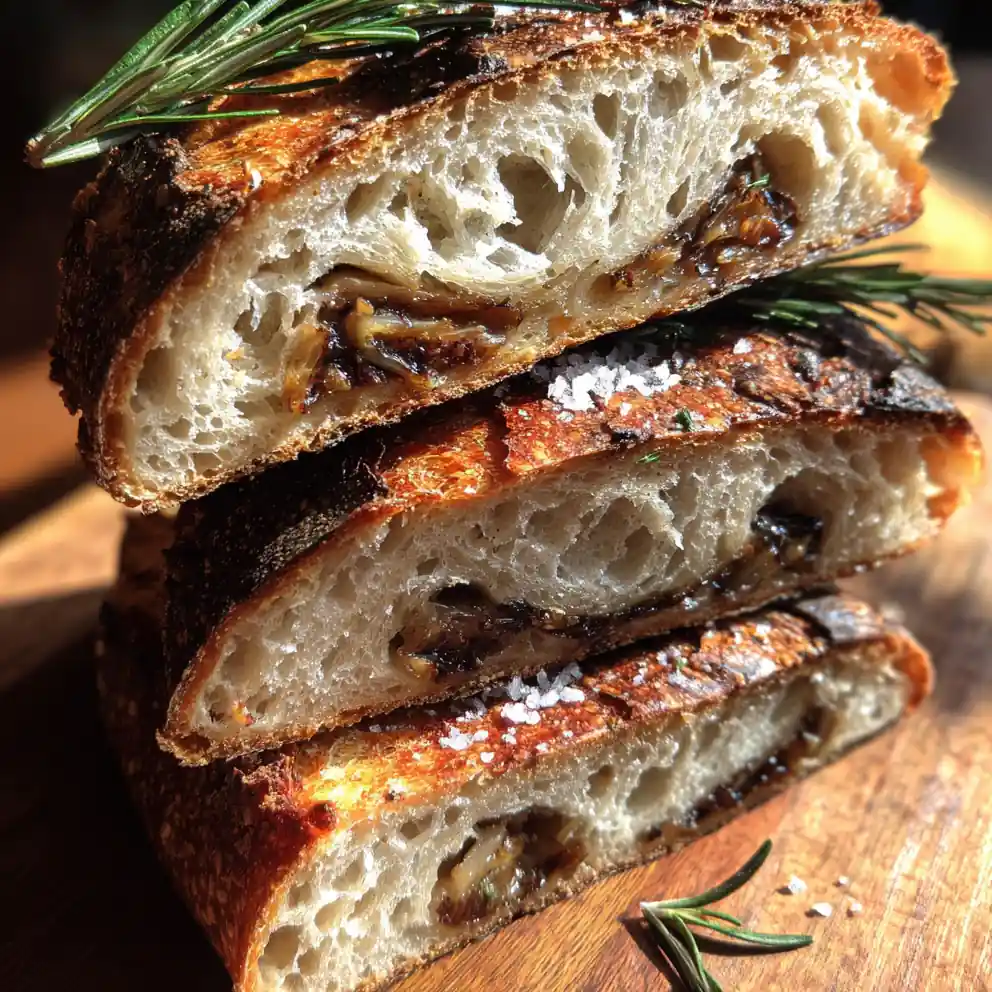
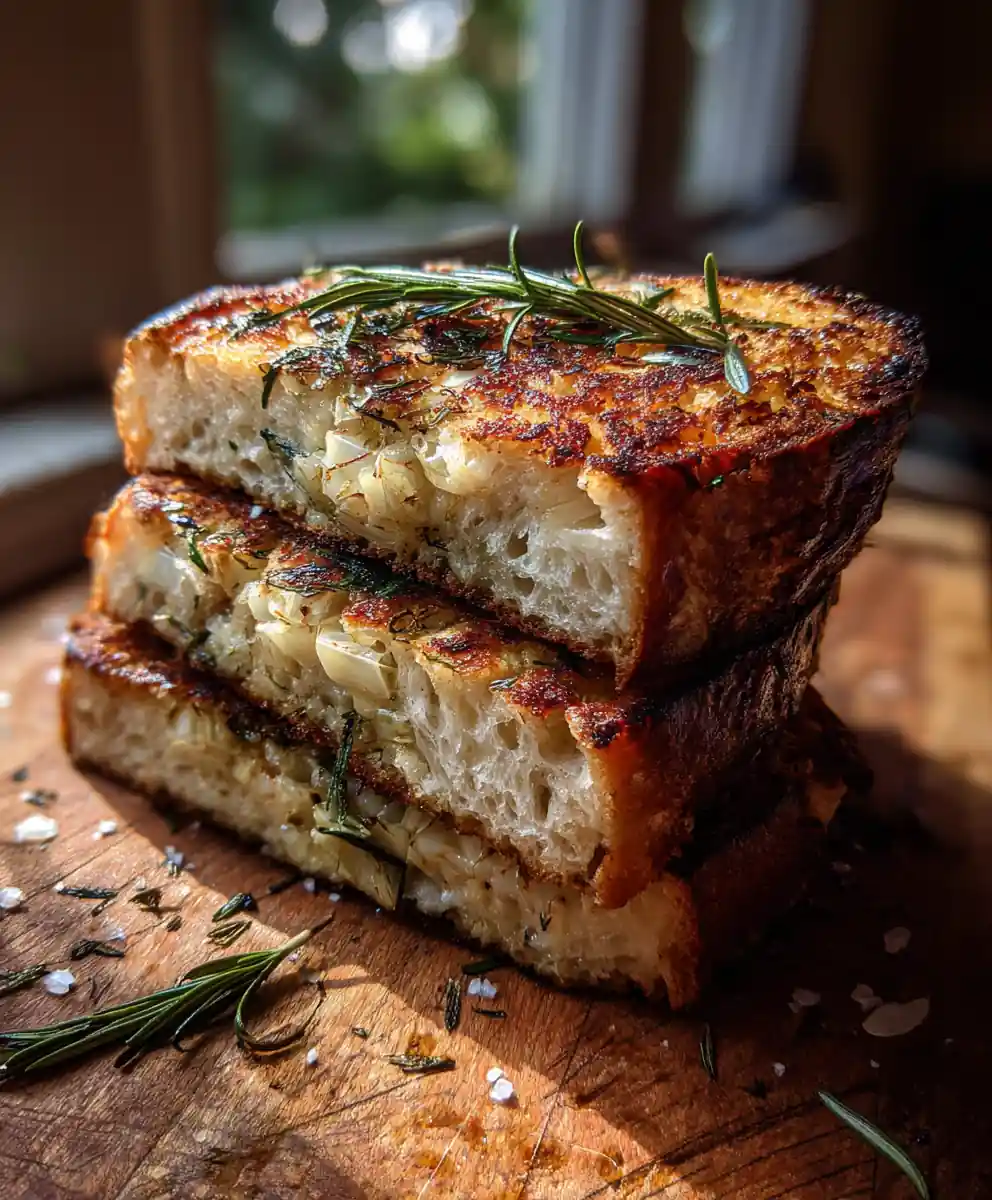
Ensure a sliced piece is prominently displayed to reveal the distinctive dark, aromatic roasted garlic and rosemary swirl within the light, open crumb.
Troubleshooting Common Issues with Gluten-Free Sourdough
A gluten-free sourdough recipe can present unique challenges compared to traditional baking. These common issues are easily resolved by understanding the specific properties of a gluten-free dough.
- Why did my gluten-free sourdough not rise properly?
The most common causes are a weak or inactive starter, insufficient psyllium husk powder (or using the wrong type), or a cold proofing environment that stalled fermentation. Ensure your starter is robust before use and follow temperature guidelines precisely. - What should I do if my dough is too sticky to handle?
Gluten-free sourdough dough will always be stickier than wheat dough; resist adding excess flour during shaping, which can dry out the final loaf. Instead, lightly dampen your hands and use minimal flour on the work surface, using gentle stretching motions instead of rough kneading. - Why is the inside of my loaf gummy or dense?
This is almost always due to slicing the bread before it has had adequate time to cool completely. Sourdough needs 2-3 hours on a wire rack to allow the internal structure to set; impatience will result in a gummy texture. Ensure you are using the precise amount of psyllium husk powder, as too little will also cause density issues.
The Role of Psyllium Husk Powder in Gluten-Free Bread Baking
Understanding the importance of psyllium husk powder is key to successful gluten-free sourdough. Psyllium husk powder acts as a binding agent, mimicking the elasticity and structure that gluten provides in wheat flour. When mixed with water, it forms a viscous gel that traps gases during fermentation, creating the necessary rise and chewy texture for this specific gluten free sourdough recipe.
The psyllium husk powder also helps create the signature open crumb structure that defines sourdough bread. Because gluten-free flour blends lack the proteins needed to form a network, psyllium takes over this role, allowing for better oven spring. Do not substitute with other binders like xanthan gum or whole psyllium husks, as they will yield different results; the powder form is essential for a good gluten free sourdough loaf.
Ingredient Swaps and Customizations
This gluten free sourdough recipe offers flexibility for customization.
- Can I change the garlic and rosemary swirl ingredients?
Yes, you can substitute the roasted garlic and rosemary with other herbs and savory fillings. Consider a sun-dried tomato and basil swirl, or perhaps a caramelized onion and thyme mixture. Ensure whatever filling you choose is not excessively wet or oily, as this can make the dough difficult to handle and disrupt the rise. - How do I make this recipe completely vegan?
The recipe as written is already vegan, provided your starter is maintained with gluten-free flour and water. This specific gluten free sourdough recipe requires no animal products, relying solely on the power of the starter and psyllium husk powder for its structure and flavor.
FAQs
Can I make this gluten free sourdough recipe without a Dutch oven?
Yes, while a Dutch oven provides the best results for crust and rise, you can bake it on a preheated baking steel or stone. To replicate the steam, place a pan of water on the rack below the bread and spray the oven walls with water when you first place the loaf inside.
What if my kitchen is cold and my dough isn’t rising?
If your kitchen temperature is below 20°C (68°F), fermentation will be slow; try placing the covered bowl in a slightly warmer spot, such as near a warm appliance or inside a turned-off oven with the light on. For this specific gluten free sourdough recipe, I often place the bowl on top of the refrigerator where the small amount of heat from the back vent provides a consistent, gentle warmth to help with the rise.
Is it okay to use pre-minced garlic for the swirl?
Using pre-minced garlic is highly discouraged; the roasting process transforms the flavor and texture of fresh garlic in a way that pre-minced garlic cannot replicate. Pre-minced garlic often contains preservatives and will burn easily during roasting, leading to a bitter taste in your final loaf.
Can I freeze this gluten free sourdough bread?
Yes, after cooling completely, slice the bread and freeze in an airtight freezer bag for up to 3 months. To serve, thaw individual slices on the counter or lightly toast from frozen. This makes it a great option for healthy, easy meal prep throughout the week.
Conclusion
Baking a truly satisfying gluten free sourdough loaf at home is entirely achievable with this detailed recipe. The unique combination of a strong starter, psyllium husk powder, and a delicious roasted garlic-rosemary swirl creates a loaf that is both beautiful and deeply flavorful. We encourage you to try this gluten free sourdough recipe this weekend and share your finished loaf with us by saving this recipe for family dinners on Pinterest.
Print
gluten free sourdough recipe
- Total Time: 115 minutes
- Yield: 1 loaf (10 servings) 1x
- Diet: Gluten-Free, Vegan
Description
This hearty gluten-free sourdough loaf features a rich swirl of roasted garlic and fresh rosemary, using psyllium husk powder to create a perfectly chewy crumb and crust that rivals traditional wheat-based bread.
Ingredients
- 150 g (5.3 oz) active gluten-free sourdough starter
- 380 g (1.75 cups) warm water (35-40°C / 95-105°F)
- 450 g (3.5 cups) gluten-free bread flour blend
- 25 g (3 tbsp) psyllium husk powder
- 10 g (1.5 tsp) fine sea salt
- 15 g (1 tbsp) olive oil
- 30 ml (2 tbsp) olive oil, for roasting garlic
- 2 whole heads garlic
- 2 tbsp fresh rosemary, finely chopped
- 1 tsp coarse sea salt, for garnish
- 2–3 fresh rosemary sprigs, for garnish
Instructions
- Roast Garlic: Preheat oven to 180°C (350°F). Slice off the tops of two garlic heads, drizzle with 30 ml (2 tbsp) olive oil, wrap in foil, and roast for 45-60 minutes until soft. Squeeze out cloves, mash, and mix with 2 tablespoons chopped fresh rosemary and a pinch of salt; set aside.
- Mix Dough: Combine starter and warm water in a large bowl. Add flour blend, psyllium husk powder, 10 g (1.5 tsp) salt, and 15 g (1 tbsp) olive oil. Mix on low speed for 5-7 minutes until a sticky, cohesive dough forms.
- Bulk Fermentation: Cover the bowl and let the dough rest at room temperature for 3-4 hours. Perform stretch and folds every 45 minutes for the first 2 hours to develop structure.
- Shape Loaf: Turn the dough onto a lightly floured surface and pat into a rough rectangle (1.5 cm thick). Spread the roasted garlic mixture evenly over the dough, leaving a small border.
- Roll and Proof: Tightly roll the dough into a log, pinch the seam closed, and tuck the ends underneath. Place the loaf seam-side up in a floured proofing basket. Cover and cold proof in the refrigerator for 12-16 hours.
- Bake Loaf: Preheat oven to 230°C (450°F) with a Dutch oven inside for 30 minutes. Carefully invert the cold dough into the hot Dutch oven and score the top. Cover and bake for 30 minutes.
- Finish Baking: Remove the lid and continue baking for 20-25 minutes, or until the crust is deeply golden brown (internal temperature 93-96°C / 200-205°F).
- Cool Completely: Transfer the loaf to a wire rack and cool completely for at least 2-3 hours before slicing to avoid a gummy texture.
Notes
To avoid a gummy texture in the center of the loaf, ensure you let the bread cool completely on a wire rack for at least 2-3 hours before slicing. The psyllium husk powder is essential for structure; do not substitute it with whole psyllium husks or other binders. For best results, use fresh rosemary and roast whole garlic heads instead of pre-minced garlic.
- Prep Time: 60 minutes
- Cook Time: 55 minutes
- Category: Bread
- Method: Sourdough Baking
- Cuisine: European
Nutrition
- Serving Size: 1 slice
- Calories: 180 kcal
- Sugar: 0 g
- Sodium: 300 mg
- Fat: 5 g
- Saturated Fat: 1 g
- Unsaturated Fat: 4 g
- Trans Fat: 0 g
- Carbohydrates: 30 g
- Fiber: 3 g
- Protein: 5 g
- Cholesterol: 0 mg
FREE PRINTABLE RECIPE
Get the Printable Recipe PDF (Free)
Enter your email and we’ll send you the ingredients + step-by-step instructions as a clean PDF you can save to your phone.
- ✅ Printable PDF (ingredients + steps)
- ✅ Save it to your phone (no long scrolling)
- ✅ Includes cook time + servings
- ✅ Easy to follow
FAQ
Where’s the full recipe?
It’s delivered as a printable PDF so you can save it and cook without scrolling.
I didn’t get the email.
Check Spam/Promotions and search your inbox for your site name. Then click Confirm to receive the PDF.