
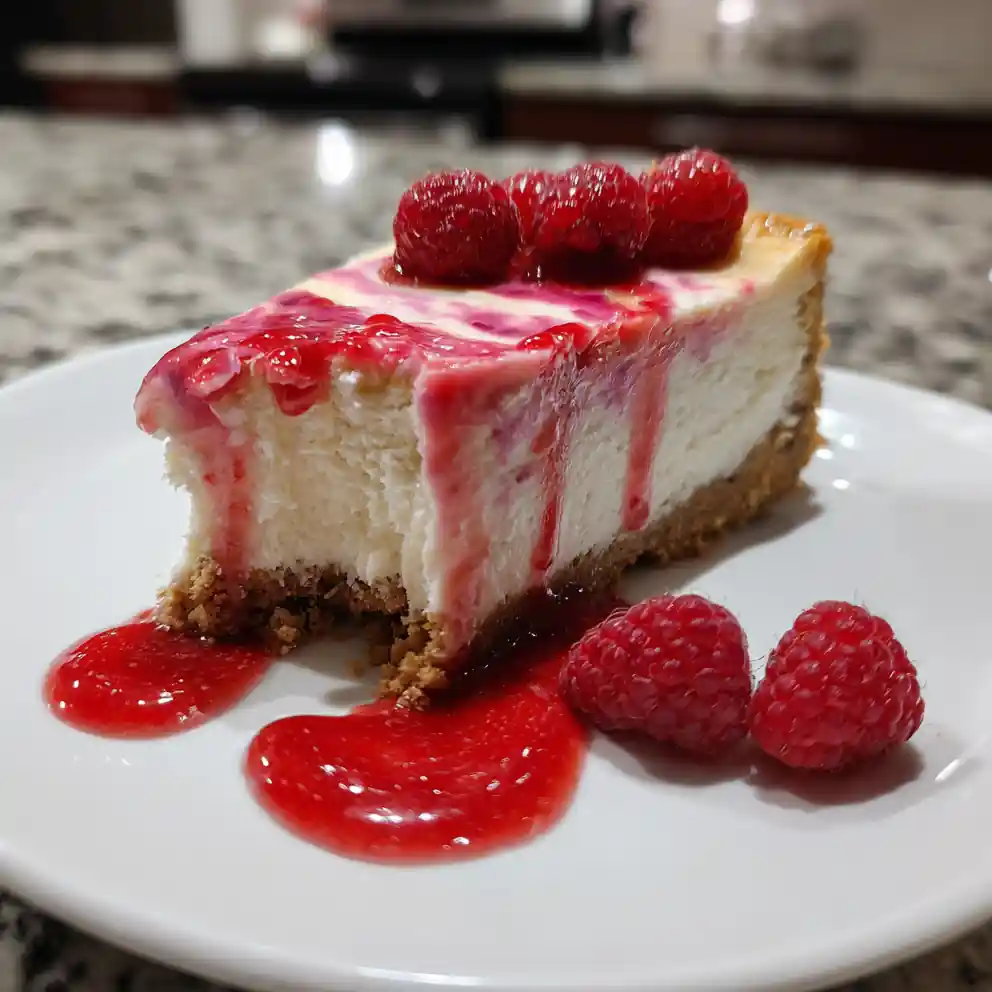
I used to think a truly satisfying cheesecake couldn’t be part of a healthy lifestyle, but this protein cheesecake recipe changed my mind. This decadent dessert satisfies cravings while supporting my healthy eating goals. It transforms a classic indulgence into a better-for-you dessert, perfect for family dinners or quick meal prep. We’re skipping overly sweet store-bought versions and creating a rich, velvety filling that’s packed with protein and features a vibrant raspberry-rose swirl. This protein cheesecake recipe is accessible for any home cook, ensuring flavor doesn’t compromise on nutrition.
Ingredients
- 180 g (6.3 oz) Digestive Biscuits, crushed finely
We use digestive biscuits for a sweet, slightly nutty base; crush completely in a food processor or a Ziploc bag for a fine crumb. If you can’t find digestive biscuits, a similar amount of graham cracker crumbs or vanilla wafers works just as well for the crust.
- 45 g (3 tbsp) Unsalted Butter, melted
The butter acts as the binding agent for the crust, holding the crumbs together so they don’t fall apart when cut. Melt the butter gently in the microwave or on the stovetop; ensure it’s fully liquid before combining with the crumbs.
- 15 g (1 tbsp) Granulated Sugar, for crust
This small amount of sugar adds a touch of sweetness to the crust and helps with browning when pre-baked. You can use brown sugar for a slightly deeper molasses flavor, or omit entirely if preferred.
- 700 g (25 oz) Full-Fat Cream Cheese, softened
This protein cheesecake recipe relies on full-fat cream cheese for achieving the rich, creamy, and classic cheesecake texture without a rubbery feel. Ensure the cream cheese is fully softened to room temperature before mixing; cold cream cheese will leave lumps in your filling. Avoid using low-fat or fat-free cream cheese as they contain extra stabilizers that can alter the final texture and make it less smooth.
- 120 g (1/2 cup) Granulated Sugar, for filling
Provides necessary sweetness to offset the tanginess of the cream cheese and yogurt in the filling. You can slightly reduce the sugar to 1/3 cup if you prefer a less sweet dessert; avoid using artificial sweeteners for best results here.
- 60 g (1/2 cup) Unflavored or Vanilla Protein Powder
This is the key ingredient for adding extra protein; use a high-quality whey protein powder (isolate or concentrate) for best results in this protein cheesecake recipe. Unflavored protein powder allows the vanilla and raspberry flavors to shine, while vanilla-flavored protein powder adds extra depth. Avoid using plant-based protein powders as they tend to absorb moisture differently and can lead to a drier, less creamy result.
- 180 g (3/4 cup) Plain Greek Yogurt, full-fat
Greek yogurt adds a pleasant tang and extra creaminess, while also boosting the protein content for this healthy protein cheesecake recipe. Use full-fat plain Greek yogurt for the best flavor and texture; ensure it’s at room temperature to avoid shocking the cream cheese mixture.
- 2 Large Eggs
Eggs are crucial for binding the cheesecake filling together, creating a stable structure that sets properly when baked. Use large eggs at room temperature; cold eggs can stiffen the batter and prevent even mixing. The eggs should be added last and mixed only until just combined to prevent incorporating too much air, which causes cracks.
- 10 mL (2 tsp) Alcohol-Free Vanilla Extract
Vanilla extract enhances the sweetness and depth of the overall flavor profile. Alcohol-free extract provides a clean vanilla flavor that pairs well with the delicate raspberry and rose notes without any bitterness.
- 2.5 mL (1/2 tsp) Fine Sea Salt
Salt is vital for balancing the sweetness and enhancing all other flavors in the cheesecake filling. Use fine sea salt or kosher salt; adjust slightly if using salted butter in the crust. Do not skip the salt; it prevents the dessert from tasting flat and one-note.
- 200 g (7 oz) Fresh or Frozen Raspberries, divided
We use 150g of raspberries for the swirl sauce and reserve 50g of fresh raspberries for garnish on the final dessert. Fresh raspberries provide the best flavor and color for the swirl, but frozen raspberries can be used if fresh are out of season.
- 50 g (1/4 cup) Granulated Sugar, for swirl
This sugar sweetens the raspberry sauce, balancing the tartness of the fruit and creating a thick, glossy consistency. The sugar also helps to slightly thicken the sauce as it cooks; adjust to your taste based on the sweetness of your raspberries.
- 15 mL (1 tbsp) Fresh Lemon Juice
Lemon juice brightens the raspberry flavor, prevents the sauce from becoming overly cloying, and enhances the color. Use fresh lemon juice for the best results; it also contributes to the thickening process by reacting with the pectin in the raspberries.
- 5 mL (1 tsp) Pure Rosewater
Rosewater adds a delicate, slightly floral aroma that perfectly complements the raspberry for an elegant flavor profile. If you prefer a more classic flavor, simply omit the rosewater entirely for a standard raspberry swirl.
Instructions
- Prepare the Baking Environment and Crust:
Preheat your oven to 160°C (325°F) and lightly grease a 23 cm (9-inch) springform pan. Tightly wrap the exterior of the springform pan in a double layer of heavy-duty aluminum foil to create a waterproof barrier for the water bath. In a medium bowl, combine the crushed digestive biscuits, melted butter, and 15g (1 tbsp) granulated sugar; press firmly into the bottom of the pan and bake for 10 minutes until lightly golden. Remove the crust from the oven and set it aside to cool slightly while preparing the filling.
- Prepare the Raspberry-Rose Swirl Sauce:
In a small saucepan, combine 150g (5.3 oz) of the raspberries, 50g (1/4 cup) granulated sugar, and fresh lemon juice. Bring the mixture to a simmer over medium heat, stirring occasionally, until the raspberries break down and the sauce thickens slightly, approximately 5-7 minutes. Press the cooked mixture through a fine-mesh sieve into a clean bowl to remove all seeds and solids, then stir in the pure rosewater. Let the sauce cool completely before use; set aside 2 tablespoons of the smooth sauce for a final garnish when serving.
- Create the Cheesecake Filling:
In a large bowl using an electric mixer on medium speed, beat the softened cream cheese and 120g (1/2 cup) granulated sugar until the mixture is completely smooth and creamy, about 2-3 minutes. Scrape down the sides of the bowl as needed to ensure all ingredients are evenly incorporated, preventing lumps in the final product. Add the protein powder, Greek yogurt, eggs, alcohol-free vanilla extract, and fine sea salt, then beat on low speed until just combined and smooth. Be careful not to overmix the batter once the eggs are added, as this can incorporate too much air and increase the risk of cracking during baking.
- Layer and Swirl the Cheesecake:
Pour approximately half of the prepared cheesecake batter evenly over the pre-baked and cooled crust in the springform pan. Dollop half of the remaining raspberry-rose sauce (excluding the reserved garnish portion) in evenly spaced spots over the first layer of batter. Gently use a thin knife or skewer to create a marbled effect, pulling the sauce through the batter in a swirling motion. Carefully pour the remaining cheesecake batter over the swirled layer, then dollop the rest of the sauce on top and gently swirl again for distinct ribbons.
- Bake in a Water Bath:
Place the foiled springform pan into a larger roasting pan; carefully pour hot water into the roasting pan until it reaches halfway up the sides of the springform pan, creating a water bath. Bake in the preheated oven for 60-75 minutes, or until the edges are set but the center of the protein cheesecake recipe still has a slight jiggle when gently shaken. This gentle jiggle indicates a perfectly set center that will firm up completely during cooling.
- Cool and Chill Completely:
Turn off the oven, prop the door open slightly with a wooden spoon, and let the cheesecake cool slowly in the water bath for 1 hour to prevent cracking. Remove the cheesecake from the water bath, unwrap the foil, and cool completely on a wire rack at room temperature. Once fully cooled, transfer the protein cheesecake recipe to the refrigerator and chill for a minimum of 6 hours, preferably overnight, for the final set.
- Serve and Garnish:
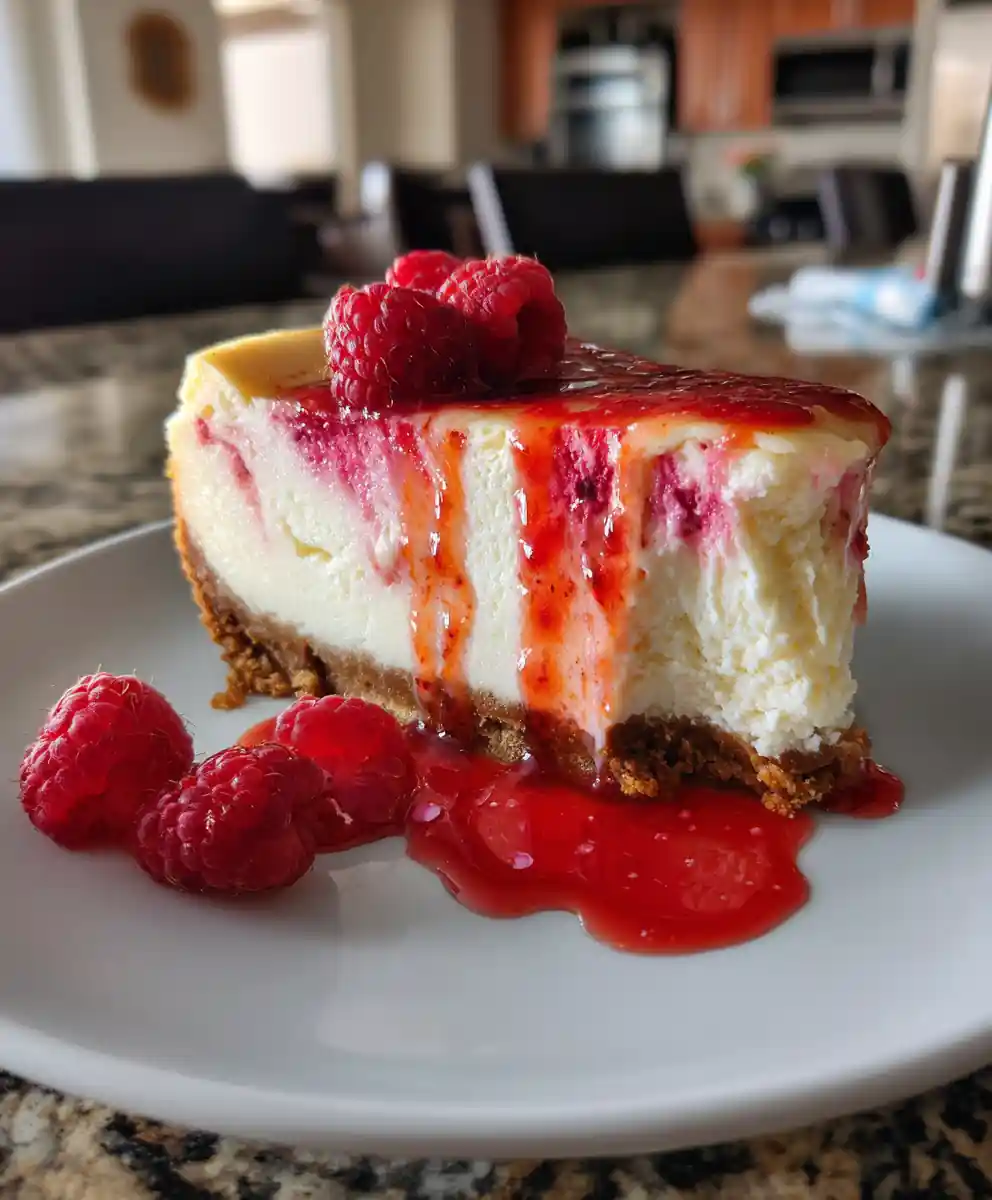
To serve, carefully remove the cheesecake from the springform pan by running a thin knife around the edge before releasing the spring. Place a slice on a clean plate and drizzle generously with the reserved glossy raspberry-rose sauce. Garnish with a few fresh raspberries placed artfully beside the slice for a burst of vibrant color and texture contrast. I usually find that using a 9×13 roasting pan instead of a smaller one helps distribute the water bath heat more evenly for a consistent bake.
Why You Need a Water Bath for Cheesecake
A water bath, or bain-marie, might sound fussy, but it’s essential for a perfectly creamy protein cheesecake recipe. The humid environment created by the steam prevents the top from drying out and cracking. It allows the cheesecake to bake slowly and evenly from the edges to the center.
This gentle cooking process results in that signature smooth, velvety texture, ensuring a perfect set every time. When setting up the water bath, I’ve learned to always use a double layer of heavy-duty foil; I once tried a single layer, and it leaked just enough water to ruin the crust.
Make-Ahead Tips and Storage
This protein cheesecake recipe is ideal for make-ahead meal prep; the flavor truly deepens after chilling overnight or up to two days. For the best texture and clean slices, ensure the cheesecake chills for at least six hours. Store leftovers in an airtight container in the refrigerator for up to four days.
To freeze, wrap slices or the whole protein cheesecake tightly in plastic wrap, then foil, and thaw overnight in the fridge before serving.
FAQs
What kind of protein powder works best in this recipe?
Whey protein powder (isolate or concentrate) is recommended for its smooth consistency and minimal impact on texture. Avoid plant-based protein powders as they can create a gritty texture and absorb more moisture, which changes the result of this healthy protein cheesecake.
Why did my protein cheesecake crack on top?
Cracking is almost always caused by overbaking or sudden temperature changes during cooling. The water bath and slow cooling process in the instructions are designed to prevent this. Ensure you turn off the oven and let it cool gradually.
Can I substitute the Greek yogurt?
While Greek yogurt adds extra protein and creaminess, you can substitute it with the same amount of sour cream for a similar rich flavor and texture.
Is it okay to skip the rosewater?
Yes, the rosewater adds an elegant, floral note, but it is entirely optional. If you prefer a traditional raspberry swirl, omit the rosewater and add a tiny bit more vanilla extract if desired.
How do I get clean slices without sticking?
The best method for clean slices is to dip a sharp, thin knife into hot water, wipe it clean with a towel, and make each slice with a fresh cut. Repeat this process for every piece. A small personal tip I’ve found useful is keeping a tall glass of hot water nearby and dipping my knife before each cut for the cleanest results.
How do I prevent a soggy crust when using a water bath?
The key is pre-baking the crust and ensuring the springform pan is wrapped securely in a double layer of heavy-duty aluminum foil.
Conclusion
This raspberry-rose protein cheesecake recipe proves that healthy eating doesn’t mean sacrificing flavor or elegance. The creamy texture and vibrant swirl make it a perfect centerpiece dessert that satisfies every craving; save this recipe on Pinterest for easy access during your next meal prep session!
Print
protein cheesecake recipe
- Total Time: 115 minutes
- Yield: 12 servings 1x
- Diet: High Protein
Description
This decadent protein cheesecake recipe offers a rich, velvety filling with a vibrant raspberry-rose swirl. It transforms a classic indulgence into a healthier dessert option for family dinners or meal prep.
Ingredients
- For the Crust:
- 180 g (6.3 oz) digestive biscuits, crushed finely
- 45 g (3 tbsp) unsalted butter, melted
- 15 g (1 tbsp) granulated sugar
- For the Cheesecake Filling:
- 700 g (25 oz) full-fat cream cheese, softened
- 120 g (1/2 cup) granulated sugar
- 60 g (1/2 cup) unflavored or vanilla protein powder
- 180 g (3/4 cup) full-fat plain Greek yogurt
- 2 large eggs, room temperature
- 10 mL (2 tsp) alcohol-free vanilla extract
- 2.5 mL (1/2 tsp) fine sea salt
- For the Raspberry-Rose Swirl:
- 200 g (7 oz) fresh or frozen raspberries, divided
- 50 g (1/4 cup) granulated sugar
- 15 mL (1 tbsp) fresh lemon juice
- 5 mL (1 tsp) pure rosewater (optional)
Instructions
- Prepare Crust and Pan: Preheat the oven to 160°C (325°F) and prepare a 9-inch springform pan by greasing and wrapping the outside tightly with double foil. Combine crushed biscuits, melted butter, and 1 tbsp sugar; press into the pan bottom and bake for 10 minutes until lightly golden.
- Make Raspberry Swirl Sauce: In a small saucepan, combine 150g raspberries, 1/4 cup sugar, and lemon juice. Simmer over medium heat for 5-7 minutes until thickened. Strain through a sieve to remove seeds, then stir in rosewater (if using) and cool completely. Reserve 2 tablespoons for garnish.
- Prepare Cheesecake Filling: Beat softened cream cheese and 1/2 cup sugar in a large bowl until smooth. Scrape down the bowl, then add protein powder, Greek yogurt, eggs, vanilla extract, and salt. Mix on low speed until just combined and smooth, avoiding overmixing.
- Layer and Swirl Batter: Pour half of the cheesecake batter over the pre-baked crust. Dollop half of the raspberry sauce on top, then swirl gently with a thin knife. Carefully pour remaining batter over the top, add remaining sauce, and swirl again to create ribbons.
- Bake in a Water Bath: Place the foiled springform pan in a large roasting pan. Pour hot water into the roasting pan until it reaches halfway up the sides of the springform pan. Bake for 60-75 minutes, or until the edges are set and the center slightly jiggles.
- Cool Completely: Turn off the oven, prop the door open, and allow the cheesecake to cool slowly in the water bath for 1 hour. Remove from the water bath, unwrap foil, and cool completely on a wire rack. Refrigerate for at least 6 hours (preferably overnight).
- Serve and Garnish: Carefully remove the cheesecake from the springform pan. To serve, drizzle with the reserved raspberry-rose sauce and garnish with the remaining fresh raspberries.
Notes
Ensure all dairy ingredients and eggs are at room temperature for a lump-free filling. For clean slices, dip a sharp, thin knife in hot water and wipe it clean before each cut. Avoid overmixing the batter, especially after adding the eggs, to prevent cracks during baking. To prevent a soggy crust, ensure the springform pan is wrapped tightly in a double layer of heavy-duty aluminum foil for the water bath.
- Prep Time: 40 minutes
- Cook Time: 75 minutes
- Category: Dessert
- Method: Baking
- Cuisine: American
Nutrition
- Serving Size: 1 slice
- Calories: 400 kcal
- Sugar: 16 g
- Sodium: 200 mg
- Fat: 28 g
- Saturated Fat: 20 g
- Unsaturated Fat: 8 g
- Trans Fat: 0 g
- Carbohydrates: 31 g
- Fiber: 2 g
- Protein: 11 g
- Cholesterol: 60 mg
FREE PRINTABLE RECIPE
Get the Printable Recipe PDF (Free)
Enter your email and we’ll send you the ingredients + step-by-step instructions as a clean PDF you can save to your phone.
- ✅ Printable PDF (ingredients + steps)
- ✅ Save it to your phone (no long scrolling)
- ✅ Includes cook time + servings
- ✅ Easy to follow
FAQ
Where’s the full recipe?
It’s delivered as a printable PDF so you can save it and cook without scrolling.
I didn’t get the email.
Check Spam/Promotions and search your inbox for your site name. Then click Confirm to receive the PDF.