
Looking for a breakfast that’s both incredibly delicious and surprisingly easy to make? Look no further! These Creamy Cottage Cheese Scrambled Eggs are a game-changer. The addition of cottage cheese might sound unusual, but it creates the most unbelievably fluffy, moist, and flavorful scrambled eggs you’ve ever tasted. Forget dry, rubbery eggs – this recipe delivers a melt-in-your-mouth experience every single time. Perfect for a weekend brunch, a quick weekday breakfast, or even a light dinner, these eggs are guaranteed to become a new favorite. We’ll show you how to achieve perfectly creamy scrambled eggs with a secret ingredient that will elevate your breakfast game.
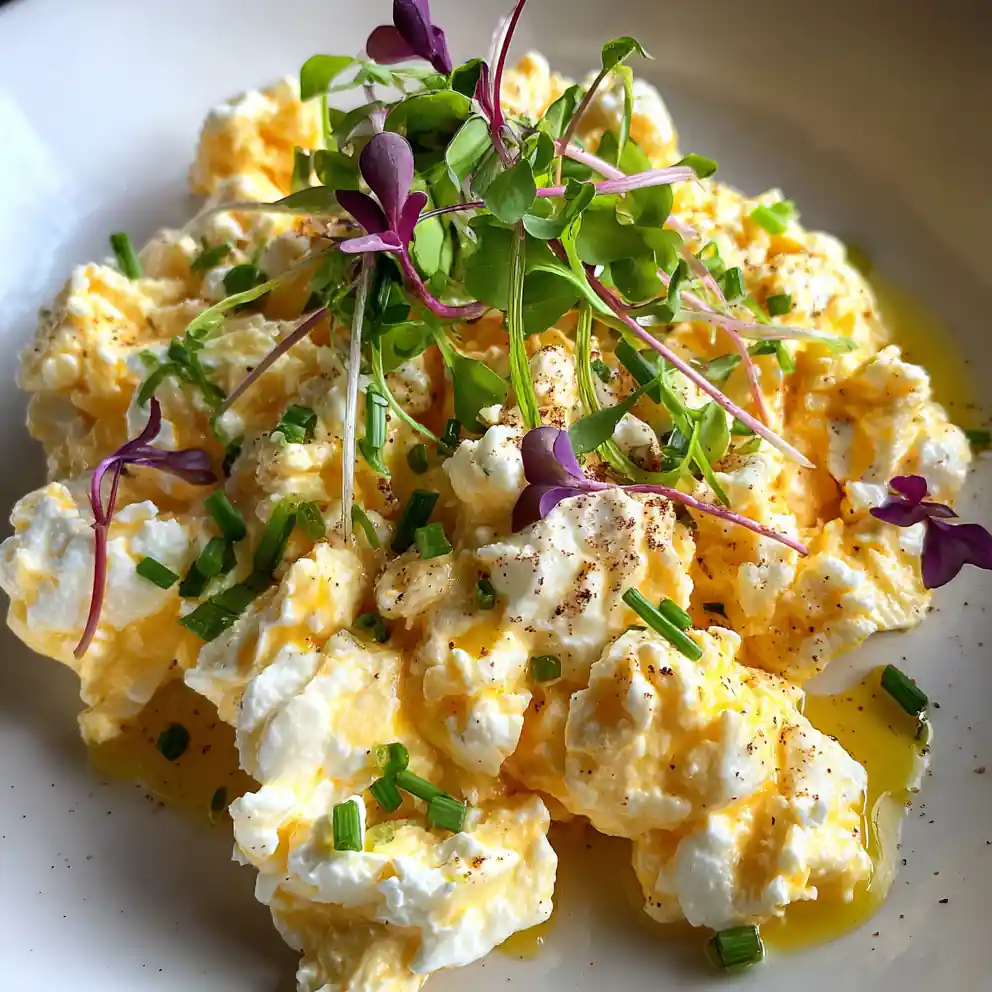
Ingredients for Creamy Cottage Cheese Scrambled Eggs
- 4 large eggs (200 g / 7 oz): The foundation of our dish! Use fresh, high-quality eggs for the best flavor and texture. Large eggs are standard for recipes, providing a good balance of yolk and white.
- 100 g (3.5 oz) cottage cheese: This is the star ingredient! Full-fat cottage cheese works best for maximum creaminess, but you can use lower-fat options if preferred. The cottage cheese adds protein and a lovely tang, while also creating a wonderfully soft texture.
- 30 ml (2 Tbsp) whole milk or unsweetened almond milk: A little liquid helps to create a lighter, fluffier texture. Whole milk adds richness, while unsweetened almond milk is a great dairy-free alternative.
- 15 g (1 Tbsp) unsalted butter: Butter provides essential fat for cooking and adds a rich, savory flavor. Using unsalted butter allows you to control the overall saltiness of the dish.
- 1 g (¼ tsp) fine sea salt: Salt enhances the flavors of all the ingredients. Fine sea salt dissolves easily and distributes evenly throughout the eggs.
- 0.5 g (¼ tsp) freshly ground black pepper: A classic seasoning that adds a subtle spice and depth of flavor. Freshly ground pepper is always best for its aroma and taste.
- 1 g (¼ tsp) smoked paprika: This adds a beautiful smoky aroma and a hint of warmth. Smoked paprika elevates the flavor profile beyond basic scrambled eggs.
- 2 g (½ tsp) fresh chives, finely chopped: Chives provide a delicate onion flavor and a pop of fresh green color. Finely chopping ensures they distribute evenly.
- 5 g (¼ cup) microgreens (e.g., radish): Microgreens add a fresh, slightly peppery flavor and a beautiful visual garnish. Radish microgreens are a particularly nice complement to the eggs.
- 1 ml (¼ tsp) extra‑virgin olive oil: A drizzle of high-quality olive oil adds a subtle fruity flavor and a beautiful sheen to the finished dish.
Ingredient Substitutions
Don’t have everything on hand? Here are a few simple substitutions you can make:
- Cottage Cheese: If you don’t have cottage cheese, you can try ricotta cheese, but it will result in a slightly different texture.
- Milk: Heavy cream can be used for an even richer result, or coconut milk for a vegan option.
- Chives: Scallions (green onions) make a great substitute for chives.
- Smoked Paprika: Regular paprika can be used, but you’ll miss out on the smoky flavor.
How to Make the Perfect Creamy Cottage Cheese Scrambled Eggs: A Step-by-Step Guide
- Prepare the Egg Mixture: In a medium-sized bowl, crack the four large eggs. Add the 30ml (2 tablespoons) of milk – whole milk provides richness, but unsweetened almond milk works beautifully for a lighter option. Season with 1g (¼ teaspoon) of fine sea salt and 0.5g (¼ teaspoon) of freshly ground black pepper. Whisk vigorously for about 30 seconds until the mixture is a uniform, pale yellow color. This incorporates air, resulting in fluffier scrambled eggs.
- Incorporate the Cottage Cheese: Gently fold in the 100g (3.5oz) of cottage cheese into the egg mixture. Don’t overmix! The goal is to maintain some chunkiness; these pockets of cottage cheese will melt during cooking, creating those delightful creamy pockets.
- Melt the Butter: Place a non-stick skillet over low-medium heat (approximately 120°C / 250°F). Add the 15g (1 tablespoon) of unsalted butter. Swirl the pan to ensure the butter melts evenly and coats the entire surface. This prevents sticking and adds a lovely flavor.
- Cook the Eggs – Initial Set: Pour the egg and cottage cheese mixture into the heated skillet. Let it sit undisturbed for about 10 seconds. This allows a thin layer to set on the bottom, preventing immediate scrambling.
- Gentle Folding Technique: Using a silicone spatula, begin to gently fold the eggs. Scrape from the edges of the pan towards the center, tilting the pan as needed. Maintain that low-medium heat – this is crucial for creamy eggs. Avoid stirring vigorously, as this will result in smaller, drier curds.
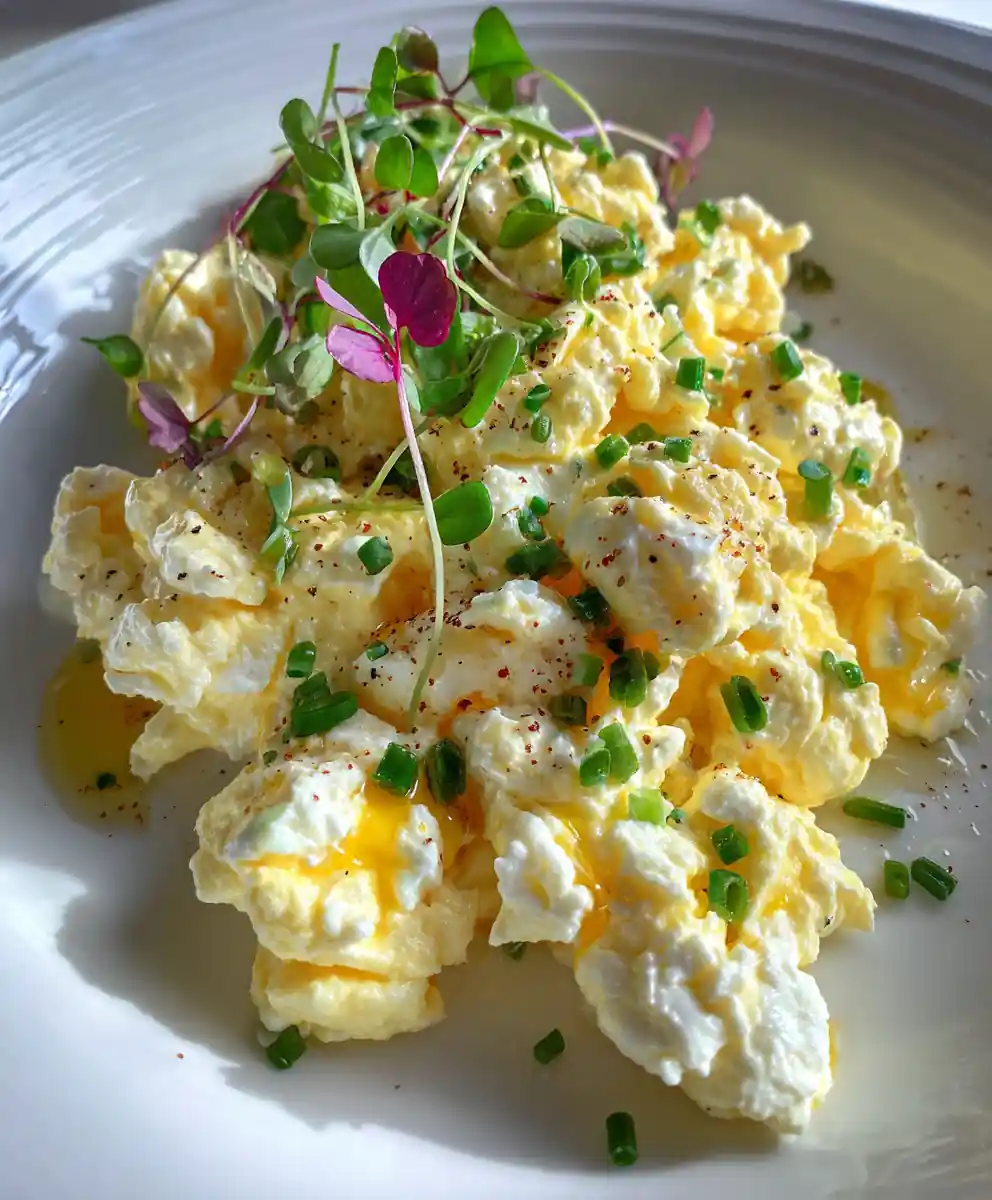
- Continue Folding & Monitor Consistency: Continue folding every few seconds for 2-3 minutes. The eggs are ready when the curds are just set but still glossy and slightly runny. Remember, they will continue to cook from the residual heat once removed from the burner.
- Final Seasoning & Fold: Remove the skillet from the heat. Sprinkle the 1g (¼ teaspoon) of smoked paprika over the eggs and give a final, gentle fold to incorporate the spice. The smoked paprika adds a subtle warmth and complexity.
- Plate & Garnish: Transfer the creamy cottage cheese scrambled eggs onto a warmed white ceramic plate. Spread them into a soft mound. Drizzle a thin line of extra-virgin olive oil across the plate for a beautiful sheen. Scatter the finely chopped chives and microgreens on top, arranging them asymmetrically for visual appeal.
- Serve Immediately: Serve the scrambled eggs immediately while they are still warm and incredibly creamy.
Why Cottage Cheese in Scrambled Eggs? The Science of Creaminess
The addition of cottage cheese isn’t just a flavor choice; it’s a textural and nutritional upgrade. Cottage cheese is high in protein and contains casein, a slow-digesting protein. When heated, casein melts and creates an incredibly creamy, almost custard-like texture. Unlike adding cream or milk alone, cottage cheese provides a substantial protein boost and a unique tang that balances the richness of the eggs. It also helps prevent the eggs from becoming dry and rubbery, ensuring a consistently soft and luxurious result.
Choosing the Right Cottage Cheese for Optimal Results
Not all cottage cheeses are created equal! For the best results, opt for a full-fat or 2% cottage cheese. Lower-fat versions tend to be more watery, which can affect the final texture of the scrambled eggs. A creamy, small-curd cottage cheese is ideal. Large-curd cottage cheese will still work, but the texture won’t be quite as smooth. If you only have large-curd, you can briefly blend it in a food processor to achieve a smoother consistency before adding it to the eggs.
Troubleshooting: Common Issues and How to Fix Them
- Eggs are too dry: You likely cooked them over too high heat or for too long. Reduce the heat and shorten the cooking time.
- Eggs are watery: The cottage cheese may have been too watery, or you may have overmixed the mixture. Gently blot any excess liquid from the cottage cheese before adding it to the eggs.
- Eggs are sticking to the pan: Ensure you’re using a non-stick skillet and enough butter.
Serving Suggestions & Flavor Variations
While these creamy cottage cheese scrambled eggs are delicious on their own, they pair beautifully with a variety of sides. Consider serving them with:
- Whole-wheat toast or English muffins
- Sliced avocado
- A side of fresh berries
- Crispy bacon or sausage
For flavor variations, try adding:
- A pinch of red pepper flakes for a little heat
- Grated Parmesan cheese for a savory boost
- Sautéed mushrooms and spinach for added nutrients
Frequently Asked Questions (FAQ)
Can I use a different type of milk?
Yes, you can! Unsweetened almond milk, oat milk, or even a splash of heavy cream will work. Just be mindful that different milks will affect the overall richness and flavor.
Can I make this recipe ahead of time?
Scrambled eggs are best enjoyed immediately. However, you can prepare the egg and cottage cheese mixture ahead of time and store it in the refrigerator for up to 24 hours. Just give it a gentle whisk before cooking.
Is cottage cheese a good source of protein?
Absolutely! Cottage cheese is packed with protein, making this a satisfying and nutritious breakfast or brunch option.
These Creamy Cottage Cheese Scrambled Eggs are a game-changer! They’re incredibly easy to make, packed with flavor and protein, and guaranteed to become a new breakfast favorite. Don’t forget to save this recipe to Pinterest for later!
Print
Creamy Cottage Cheese Scrambled Eggs
- Total Time: 10 minutes
- Yield: 2 servings 1x
- Diet: General
Description
These creamy cottage cheese scrambled eggs are a delicious and easy breakfast option. The addition of cottage cheese creates unbelievably fluffy and flavorful eggs, perfect for any meal of the day.
Ingredients
- 4 eggs (200 g / 7 oz): The base of the dish.
- 100 g (3.5 oz) cottage cheese: Adds creaminess and protein.
- 30 ml (2 Tbsp) milk: For a lighter texture.
- 15 g (1 Tbsp) butter: Provides flavor and prevents sticking.
- 1 g (¼ tsp) salt: Enhances flavors.
- 0.5 g (¼ tsp) pepper: Adds spice.
- 1 g (¼ tsp) smoked paprika: Adds smoky aroma.
- 2 g (½ tsp) chives: Provides onion flavor.
- 5 g (¼ cup) microgreens: Adds fresh flavor and garnish.
- 1 ml (¼ tsp) olive oil: Adds sheen and flavor.
Instructions
- Prepare Egg Mixture: Whisk eggs, milk, salt, and pepper.
- Incorporate Cottage Cheese: Gently fold in cottage cheese.
- Melt Butter: Melt butter in a non-stick skillet.
- Cook Eggs: Pour mixture into skillet and let set briefly.
- Fold Gently: Fold eggs gently until just set.
- Final Seasoning: Remove from heat and add paprika.
- Plate & Garnish: Serve with olive oil, chives, and microgreens.
Notes
For best results, use full-fat cottage cheese and cook over low-medium heat to prevent dryness.
- Prep Time: 5 minutes
- Cook Time: 5 minutes
- Category: Breakfast
- Method: Skillet
- Cuisine: American
Nutrition
- Serving Size: 2
- Calories: 250 kcal
- Sugar: 5 g
- Sodium: 400 mg
- Fat: 18 g
- Saturated Fat: 10 g
- Unsaturated Fat: 6 g
- Trans Fat: 0 g
- Carbohydrates: 8 g
- Fiber: 1 g
- Protein: 18 g
- Cholesterol: 200 mg